 listicle
Is Your HVAC System Trying to Tell You Something?
Last Updated: October 25, 2026
Quick Summary
The signs your HVAC needs repair are warm air or weak airflow from vents, uneven room temperatures, unusual banging or clanking noises, strange odors, short cycling, and a system that runs constantly without reaching the thermostat setting. Call for hvac repair at the first odd noise, since early fixes cost far less than waiting for failure. A burning smell, gas smell, or exhaust around a furnace is a safety emergency that needs same-day service.
- A clogged air filter restricts airflow, makes the blower motor work harder, and can overheat the system.
- Running an AC with low refrigerant can damage the compressor, the system's most expensive component.
- Ice on the coils means low airflow or refrigerant, so turn the unit off and let it thaw.
- A conventional furnace or air conditioner commonly lasts 15 to 20 years with regular maintenance.
- Two or more repairs in two years suggests the system is entering a failure cycle.
Table of Contents
- Signs Your HVAC Needs Repair: What Homeowners Miss
- Signs Your Air Conditioner Needs Repair
- Signs Your Furnace Needs Repair
- Why Is My AC Freezing? What Ice on the Coils Means
- Safe Checks You Can Do Before Calling a Technician
- HVAC Repair or Replacement Signs: How to Decide
- Urgent Warning Signs That Need Same-Day Service
- Book Your HVAC Repair Visit
- Frequently Asked Questions
Signs Your HVAC Needs Repair: What Homeowners Miss
Most homeowners catch heating and cooling trouble late, after a small fault has already stressed the compressor or cracked a heat exchanger.
An HVAC repair is any corrective service that restores a heating or cooling system to normal operation, from replacing a failed capacitor to sealing a damaged duct.
Below, we break down the warning signs by system, show you safe checks to run yourself, and explain how to decide between repair and replacement.
Why Small Symptoms Turn Into Costly Breakdowns
A system rarely dies without warning. It gives you clues for weeks, sometimes months, before it quits.
A clogged air filter is the clearest example. The U.S. Department of Energy's guide to heating and cooling notes that regular maintenance keeps equipment running efficiently and extends its service life.
The same logic applies to refrigerant, electrical components, and ductwork. Small faults compound. Catch them early and you pay for a part; ignore them and you pay for a system.
Signs Your Air Conditioner Needs Repair
An air conditioner that stops cooling properly is telling you something specific. The most common signs your air conditioner needs repair are warm air from the vents, weak airflow, uneven room temperatures, and a system that runs constantly without reaching the thermostat setting.
Warm Air, Weak Airflow, and Uneven Cooling
Warm air blowing from a cooling system points to low refrigerant, a failing compressor, or a blocked duct. Weak airflow usually traces back to a clogged air filter, a failing blower motor, or a blocked duct run.
Watch out: running an AC unit with low refrigerant can damage the compressor, the single most expensive component in the system. If the air is warm and the outdoor unit is running, shut it off and call for service rather than letting it cycle.
Signs Your Furnace Needs Repair
Heating problems show up differently than cooling problems, and a furnace or heat pump gives off clues long before it quits. The main signs your furnace needs repair are unusual noises, strange odors, short cycling, a failure to produce consistent heat, and a pilot or ignition that keeps failing. Each symptom points to a different set of plausible causes, and treating the symptom as a clue rather than a diagnosis is what keeps a small fix from becoming a mid-winter emergency.
Noises, Odors, and Short Cycling in Heating Season
Banging, clanking, or a loud rumbling from the furnace is not normal operation. Those sounds can indicate loose components, a failing blower, or delayed ignition, where gas builds up before it lights and produces a small thump or boom.
Short cycling, where the furnace turns on and off in rapid bursts, points to a thermostat problem, an overheating system, a dirty flame sensor, or a malfunctioning component.
What Each Heating Symptom Usually Means
| Symptom | Plausible causes | What it means for you |
|---|---|---|
| Banging or clanking | Loose panels, failing blower, delayed ignition | Stop and call for service; delayed ignition can be a safety issue |
| Rumbling or booming at startup | Gas buildup before ignition | Do not ignore; have the ignition system checked |
| Burning or exhaust smell | Overheating components, blocked flue, cracked heat exchanger | Shut the system off and seek same-day service |
| Musty odor | Mold in ductwork or condensate problems | Schedule service and inspect ductwork |
| Short cycling | Thermostat, flame sensor, overheating, oversized system | Professional diagnosis before the heating season deepens |
| Weak or uneven heat | Blower, duct damage, heat exchanger, refrigerant (heat pump) | Diagnose before deciding on repair |
| Pilot or ignition failure | Flame sensor, igniter, gas supply | Do not attempt DIY gas work; call a technician |
Heat Pumps Behave Like Both Systems
A heat pump moves heat rather than generating it, so its warning signs borrow from both the cooling and heating lists. In heating mode, a heat pump that blows cool air, ices over repeatedly, or runs in auxiliary or emergency heat mode more than usual is telling you something is wrong. Repeated defrost cycles, a outdoor unit that stays frosted, or a system that cannot keep up on mild days often point to low refrigerant, a reversing valve problem, or a failing defrost control.
Any of these symptoms deserves a professional diagnosis before the heating season gets colder. A technician can confirm whether the cause is a inexpensive part, a duct problem, or a component that signals the system is near the end of its service life.
Why Is My AC Freezing? What Ice on the Coils Means
Ice on the indoor or outdoor coils is a symptom, not a cause. An air conditioner freezes when airflow drops or refrigerant runs low, dropping the coil temperature below freezing and letting condensation turn to ice.
The mistake homeowners make is scraping off the ice and restarting the unit. That fixes the visible symptom and leaves the underlying fault in place. The system will freeze again, and each cycle stresses the compressor.
Safe Checks You Can Do Before Calling a Technician
You can rule out a few simple causes yourself before you schedule service. These checks are safe for any homeowner and take only a few minutes.
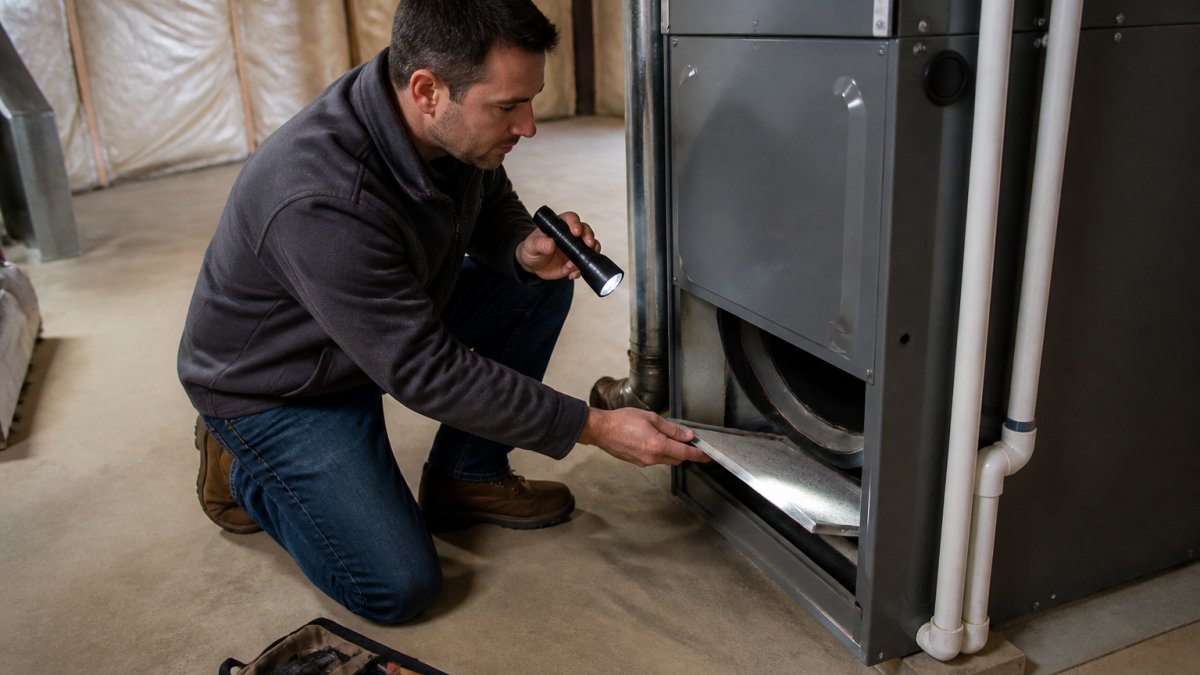
- Check the thermostat setting and batteries, and confirm it is set to the right mode.
- Replace or clean a clogged air filter, then see if airflow improves.
- Confirm the circuit breaker for the system has not tripped.
If those checks don't solve the problem, it is time for a professional diagnosis. Do not open panels, handle refrigerant, or attempt electrical work yourself.
HVAC Repair or Replacement Signs: How to Decide
The repair-versus-replace decision comes down to age, repair frequency, efficiency, and the cost of the repair relative to the cost of a new system. A system that needs repeated repairs, uses noticeably more energy than it once did, or is well past its expected service life is usually a replacement candidate. A newer system with a single clear fault is almost always worth repairing.
The Factors That Actually Move the Decision
- Age relative to expected service life. A conventional furnace or air conditioner commonly lasts in the range of 15 to 20 years with regular maintenance, and a heat pump often somewhat less. A system in the last quarter of that range with a major repair ahead is a different decision than the same repair on a five-year-old unit.
- Repair frequency. One repair in the last two years is normal wear. Two or more repairs in the same period, especially on different components, suggests the system is entering a failure cycle.
- Repair cost versus replacement cost. A common rule of thumb among practitioners is that a repair costing more than a third of the price of a new system, on a system already past mid-life, tilts toward replacement. The exact numbers vary by system type and efficiency level, so ask for both figures before you decide.
A Simple Framework We Use With Customers
| Situation | Recommendation |
|---|---|
| One repair in the last two years, system under 10 years old | Repair |
| Two or more repairs in the last two years | Weigh replacement |
| System near end of service life and facing a major repair | Weigh replacement |
| Repair cost approaching a third of replacement cost on an aging system | Weigh replacement |
| System failing to heat or cool at all | Diagnose before deciding |
| System under parts warranty | Repair is usually the clear choice |
If you are leaning toward replacement, our HVAC maintenance options can extend the life of a system that still has years left, and our HVAC installation service covers a full replacement when repair no longer makes sense. We give you an honest read rather than pushing a new system you don't need.
Urgent Warning Signs That Need Same-Day Service
Some symptoms can't wait for a scheduled visit. A burning smell, smoke, or the smell of gas around a furnace is a safety emergency: shut off the system, leave the area if you smell gas, and call for help immediately. A complete loss of heat in freezing weather, or any sign of electrical problems such as sparking or a burning odor at the unit, also warrants same-day service.
If you have an urgent issue, contact us right away so we can get a technician to you quickly.
Book Your HVAC Repair Visit
Catching the warning signs early is the single best way to avoid a costly breakdown, and a professional diagnosis is the fastest route to a lasting fix. Our licensed and insured team handles full-spectrum HVAC repairs and installations, arrives when we say we will, and gives you a straight answer on repair versus replacement.
Get started with T. Gomes Heating & Cooling and book your HVAC repair visit today. If the problem is isolated to your heating system, you can also book furnace repair directly.
Frequently Asked Questions
What are the signs that your HVAC system needs repair?
The clearest signals are warm air from the vents during cooling season, weak or limited airflow, unusual banging or clanking noises, musty or burning smells, and energy bills that climb without a change in use. Frequent cycling on and off and uneven temperatures room to room also point to a problem. Two or more of these together usually mean it is time for a professional diagnosis rather than another reset of the thermostat.
Why is my AC freezing up, and can I just let it thaw?
Ice on the indoor coil usually comes from restricted airflow or low refrigerant. A clogged air filter, a blocked duct, or a failing blower motor can all starve the coil of warm air and let it drop below freezing. Low refrigerant from a leak does the same. Letting it thaw without fixing the cause means it freezes again within days. Turn the system off, change the filter, and have a technician check refrigerant levels and airflow.
How do I know whether to repair or replace my HVAC system?
Weigh the age of the equipment, the cost of the repair, and how often problems recur. A system past 12 to 15 years old with a repair bill approaching half the price of a new unit is usually a replacement case. So is a system that has needed two or more repairs in the same season. Younger equipment with a single failed component is almost always worth repairing.
Can unusual HVAC noises mean the system needs repair?
Yes. Banging, clanking, or scraping sounds often point to a loose or broken part inside the blower or a failing motor. A high-pitched squeal can mean a worn belt or bearing. Rattling may be loose ductwork or a panel that needs tightening. Any loud noise that was not there before deserves a professional look, and banging or grinding sounds warrant shutting the system down until a technician inspects it.