 listicle
7 Reasons Why Choosing Local HVAC Companies Pays Off
Last Updated: November 7, 2026
Quick Summary
Choosing local HVAC companies pays off through faster response times, direct communication with the owner or technician, and pricing backed by a written estimate. A local contractor also knows regional climate demands and sizes equipment to your home instead of selling a standard package. For most homeowners, local wins on speed and trust.
- IBISWorld's 2026 data puts the U.S. HVAC contractors market at $159.4 billion across roughly 120,000 businesses.
- Ask any dispatcher for a response window in writing before you book a call.
- An oversized unit short-cycles, wastes energy, and wears out faster than a properly sized system.
- Verify the license number with the state and request a certificate of insurance before work begins.
- Manufacturer warranties typically cover parts, but labor coverage is often separate and shorter.
Table of Contents
- Why Local HVAC Companies Win on Speed, Trust, and Price
- Personalized Service and Direct Communication You Can Actually Reach
- Faster Response Times and Real Emergency Availability
- Regional Climate Knowledge That Shapes Sizing and Equipment Choices
- Local HVAC Company vs. National Chain: An Honest Comparison
- How to Choose an HVAC Contractor Without Getting Burned
- Questions to Ask an HVAC Contractor Before You Sign Anything
- Searching HVAC Companies Near Me: How to Filter the List Fast
- Book a Local Technician Who Shows Up and Stands Behind the Work
- Frequently Asked Questions
Why Local HVAC Companies Win on Speed, Trust, and Price
When your furnace quits on a January night, the last thing you want is a call center three states away. Choosing local HVAC companies is the fastest route to a working system, a fair price, and a technician who answers the phone himself. This guide from T. Gomes Heating & Cooling explains the reasons local providers often win, plus the questions that separate a good contractor from a bad one.
The stakes are real. IBISWorld's 2026 industry data puts the U.S. heating and air-conditioning contractors market at $159.4 billion across roughly 120,000 businesses. That's a lot of choices, and most of them are small shops within a short drive of your house.
The reasons below cover speed, trust, and price. Below, we'll show you how to vet a contractor before you sign anything.
Personalized Service and Direct Communication You Can Actually Reach
Personalized service means you talk to the person doing the work, not a dispatcher reading a script. Many local HVAC contractors aim to answer the phone and follow up after the job, which can matter when a problem returns.
Sherry S., a customer, put it plainly: "Tony, the owner, is the best! Jason, the technician, is the best! I refer this company to everyone I know."
Direct communication also means straight answers on pricing. Ask any contractor for a written estimate before work begins.
Faster Response Times and Real Emergency Availability
Response time is worth asking about directly. Ask any dispatcher for a response window in writing before you book.
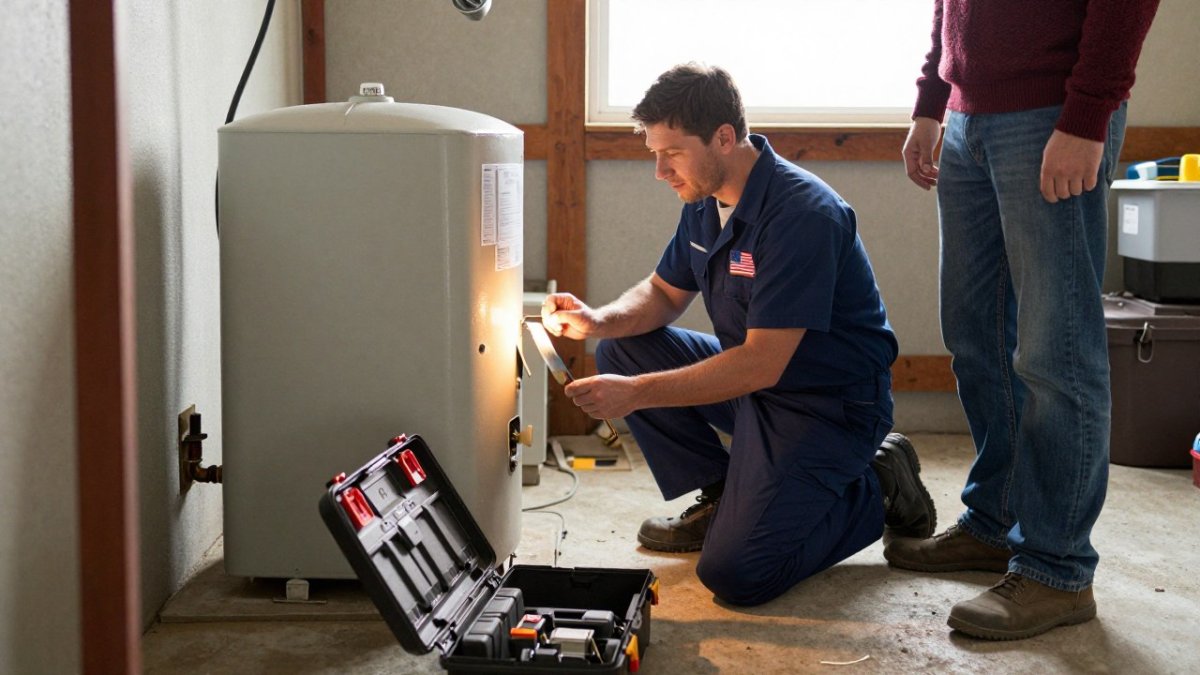
The man is American.
Emergency service is a real test of any contractor. When a heat pump fails in a cold snap, ask who will answer and how quickly a technician can arrive.
Watch out: confirm whether after-hours calls carry a premium rate before you agree, and ask what counts as an emergency.
Regional Climate Knowledge That Shapes Sizing and Equipment Choices
Regional climate can change what equipment a contractor recommends, since humid summers and cold winters both affect sizing, insulation, and defrost controls.
System sizing is the clearest example. An oversized unit short-cycles, wastes energy, and wears out faster. A local technician reads your home's square footage, ductwork, and window exposure, then matches equipment to local conditions. That's how you get lower operating costs and better indoor air quality.
If you're weighing a fuel-type conversion or a new installation, ask any contractor how they handle local utility and code requirements.
According to Workyard's HVAC industry statistics, the U.S. HVAC market was valued at $30.41 billion in 2023 and is projected to grow 7.4% annually through 2030. More equipment means more installation choices, and sizing is where those choices get made.
Local HVAC Company vs. National Chain: An Honest Comparison
The local HVAC company vs. national chain decision comes down to trade-offs, not absolutes. Local shops may offer responsiveness and community ties, while national chains may offer broader warranty networks or brand-specific equipment.
| Factor | Local HVAC Company | National Chain |
|---|---|---|
| Response time | Same-day or next-day, local trucks | Varies by franchise schedule |
| Who you talk to | Owner or technician | Call center, then dispatch |
| Pricing | Written estimate on site | Standardized tiers, varies by branch |
| Accountability | Local reputation on the line | Corporate escalation path |
| Emergency service | Often direct to a technician | Hotline triage |
| Warranty handling | Owner often files the claim | Corporate warranty desk |
| Financing | Local lender or in-house plan | National promotional programs |
Accountability is one difference worth considering. A local business's reputation is tied to its community.
That said, a national provider may be the better fit in a few cases: you're relocating and need a national warranty network, you need a specific brand only a chain carries, or you want standardized financing terms across multiple locations. For most homeowners, local still wins on speed and trust.
Ask who actually answers the phone before you book, whether the company is local or part of a larger network.
How to Compare Quotes Side by Side
Comparing a local quote to a national-chain quote is not a matter of picking the lower number. Ask each contractor for an itemized estimate that separates equipment, labor, permits, disposal, and any diagnostic fee. Then compare three things:
- Equipment model and efficiency rating. A lower quote may use a builder-grade unit with a shorter warranty. Ask for the model number and look up its efficiency rating and warranty terms.
- Labor and installation scope. Does the quote include duct evaluation, load calculation, and startup testing, or just a swap-out? A like-for-like replacement without a load calculation can leave you with an oversized or undersized system.
- Warranty and service-plan fine print. Manufacturer warranties cover parts, and labor coverage is often separate. Ask who files the claim and whether the warranty transfers if you sell the home.
A common pattern is that the lowest bid omits permits or disposal, then adds them later. A written, itemized estimate closes that gap.
When a National Provider May Be the Better Fit
A balanced view helps here. National chains can be the right call when you need a brand-specific system that only certain dealers carry, when you want a promotional financing plan with a long no-interest window, or when you're moving and want a warranty network that follows you. They can also be more consistent if you own rental property in multiple states and want one point of contact.
Local providers tend to be the better fit when you want the same technician back, when you need a fast emergency response, or when you want a contractor who will walk your basement and size the system to your house rather than sell a standard package. Neither choice is wrong, the fit depends on what you value most.
How to Choose an HVAC Contractor Without Getting Burned
How to choose an HVAC contractor starts with verification, not price. Check licensing, insurance, and reviews before anyone touches your system. A cheap quote from an unlicensed installer is the most expensive mistake in this business.
Use this vetting checklist:
- Confirm the license number and verify it with the state
- Ask for a certificate of insurance before work begins
- Get a written estimate that lists parts, labor, and warranty terms
- Read recent reviews and ask for two local references
- Ask whether the technician is an employee or a subcontractor
- Confirm the diagnostic fee and whether it applies to the repair
- Get the warranty in writing, including labor coverage
A common mistake is skipping the written estimate. Verbal quotes leave room for "while we were in there" add-ons. The 7 signs of dishonest HVAC contractors guide covers the red flags in more detail.
Installation Quality and Commissioning: What to Ask Before the Truck Arrives
Verification gets you a licensed contractor; installation quality is what determines whether the system actually heats and cools your home efficiently. Before work begins, ask whether the contractor will perform a load calculation (often called a Manual J) and a duct evaluation. A proper load calculation uses your home's square footage, insulation, window exposure, and airtightness, not a rule of thumb based on the old unit's size. Skipping it is how homeowners end up with an oversized system that short-cycles, wastes energy, and wears out faster.
Ask these questions about the install itself:
- Will you perform a room-by-room load calculation before recommending equipment?
- Will you inspect and seal the ductwork, and test airflow after installation?
- Will you commission the system, checking refrigerant charge, airflow, and startup readings, and leave the readings with me?
- Will you pull the permit, and will the work be inspected?
A contractor who cannot answer these plainly is selling a swap-out, not a system. The difference shows up in comfort and energy bills for years.
Warranty and Service-Plan Fine Print
Warranty terms are where a good hire can still go wrong. Manufacturer warranties typically cover parts for a set number of years, but labor coverage is often separate and shorter. Many manufacturers require annual maintenance by a licensed contractor to keep the warranty valid, and some require registration within a set window after installation. Ask who files the warranty claim if a part fails, the installing contractor or you, and whether the warranty transfers to a new owner if you sell.
Service plans deserve the same scrutiny. A plan that includes two visits a year and priority scheduling can be worth it; one that only discounts repairs may not. Ask what the plan covers, what it excludes, and whether the diagnostic fee is waived for plan members. Get the terms in writing before you sign.
Watch out: a warranty that requires maintenance through the installing contractor can be voided if you use another company for a tune-up, confirm the maintenance requirement in writing before you book the install.
Questions to Ask an HVAC Contractor Before You Sign Anything
Questions to ask an HVAC contractor should cover pricing, warranty, and follow-up. Ask them before you sign, and write down the answers. A straight contractor welcomes the questions; a shaky one dodges them.
Here's what to ask:
- What's the total price, and what's included in it?
- Is the diagnostic fee credited toward the repair?
- What warranty covers parts, and what covers labor?
- Will you put the scope of work in writing?
- What's your response time for a callback on the same issue?
- Are you licensed and insured in this state?
- Do you offer financing options or a service agreement?
Our 9 questions to ask HVAC technicians article expands each one with what a good answer sounds like. If a contractor can't answer question three clearly, walk away.
Searching HVAC Companies Near Me: How to Filter the List Fast
Searching "HVAC companies near me" returns dozens of results, most of them ads. Filter fast by checking three things: license status, review recency, and whether the business lists a local address. A shop with a P.O. box and no service area is a red flag.
Start with your state's licensing lookup, then read the last ten reviews, not the star average. Look for patterns: repeated complaints about no-shows or surprise charges matter more than one angry outlier.
For a local starting point, our find licensed HVAC technicians in Warwick guide lists what to verify before you call. Narrow to three contractors, then ask the questions above.
Book a Local Technician Who Shows Up and Stands Behind the Work
The final test of any HVAC company is simple: do they show up and stand behind the work? T. Gomes Heating & Cooling has operated since 2013 as a licensed and insured team, with a focus on integrity, fairness, and personal responsibility. Sara S. described her service as "extremely fast, friendly, and effective."
We handle full-spectrum repairs, installations, and maintenance for residential and commercial clients.
When you're ready, book HVAC repair or contact our team to schedule a local technician. Get started with T. Gomes Heating & Cooling and keep your home comfortable year-round.
Your system won't wait for a convenient moment, and neither should your contractor. Call a local team that answers, shows up, and stands behind the work.
Frequently Asked Questions
What are the benefits of hiring a local HVAC company?
Local HVAC companies may offer quicker access to a technician and a reputation tied to the community they serve. Many also aim to provide direct communication and pricing you can discuss in person.
Are local HVAC companies better than national chains?
Not always, but often. Local HVAC companies may offer advantages in response time, direct communication, and community accountability. National chains can be the better fit when you need a standardized warranty honored across multiple locations or you manage properties in several states. The practical move is to compare a written estimate from each, confirm licensing and insurance, and ask about emergency availability before you decide.
How do I verify an HVAC contractor's license and insurance?
Ask for the license number and insurance certificate in writing, then confirm both with your state's licensing board and the insurer directly. A legitimate contractor will hand these over without hesitation. Check that the insurance covers general liability and workers' compensation, since an uninsured technician injured on your property can create liability for you. Also confirm the policy is current, not expired, and matches the business name on your estimate.
Do local HVAC companies offer emergency service?
Most local HVAC companies do offer emergency service, and many answer after-hours calls directly rather than routing you to a dispatch center. Ask upfront what their after-hours response window is, whether there is a separate emergency rate, and who actually picks up the phone at 2 a.m. Get the answer before winter arrives, not during a furnace failure. A company that can name a specific response window is more reliable than one that promises to be there soon.