 ultimate-guide
Average Cost of HVAC System Repair: 2026 Price Guide
Table of Contents
- Average Cost of HVAC System Repair: What Homeowners Actually Pay
- HVAC Repair Cost by Type of Repair
- HVAC Diagnostic Fee and Service Call Charges
- HVAC Repair Cost Factors That Change Your Bill
- HVAC Repair vs. Replacement Cost: When to Choose Each
- How to Compare HVAC Repair Estimates From Contractors
- Warranty, Insurance, and Financing Options for HVAC System Repair
- Conclusion: Budgeting for HVAC System Repair in 2026
- Frequently Asked Questions
Last Updated: October 20, 2026
Average Cost of HVAC System Repair: What Homeowners Actually Pay
There is no single average cost of HVAC system repair, because the bill depends on the failed component, the equipment type, and the labor involved. At T. Gomes Heating & Cooling, we have handled full-spectrum repairs since 2013, and the honest answer is that two identical-looking breakdowns can land at very different price points.
Below, we break down hvac system repair by component, explain diagnostic and service-call charges, and show you how to read a contractor's estimate line by line.
HVAC Repair Cost by Type of Repair
Repair pricing splits into two broad families: cooling-side failures and heating-side failures. Each has its own range of common parts, and each part carries a different labor profile.
| Repair | Typical Installed Range (USD) | Parts Share | Labor Share | What Drives the Price |
|---|---|---|---|---|
| Capacitor (start or run) | $150-$400 | Low | High (short visit) | Part cost, travel time, access |
| Contactor or relay | $150-$450 | Low | High | Part cost, short labor window |
| Blower motor | $450-$1,200 | Moderate | Moderate | Motor type (PSC vs. ECM), access difficulty |
| Condenser fan motor | $350-$900 | Moderate | Moderate | Part availability, weather |
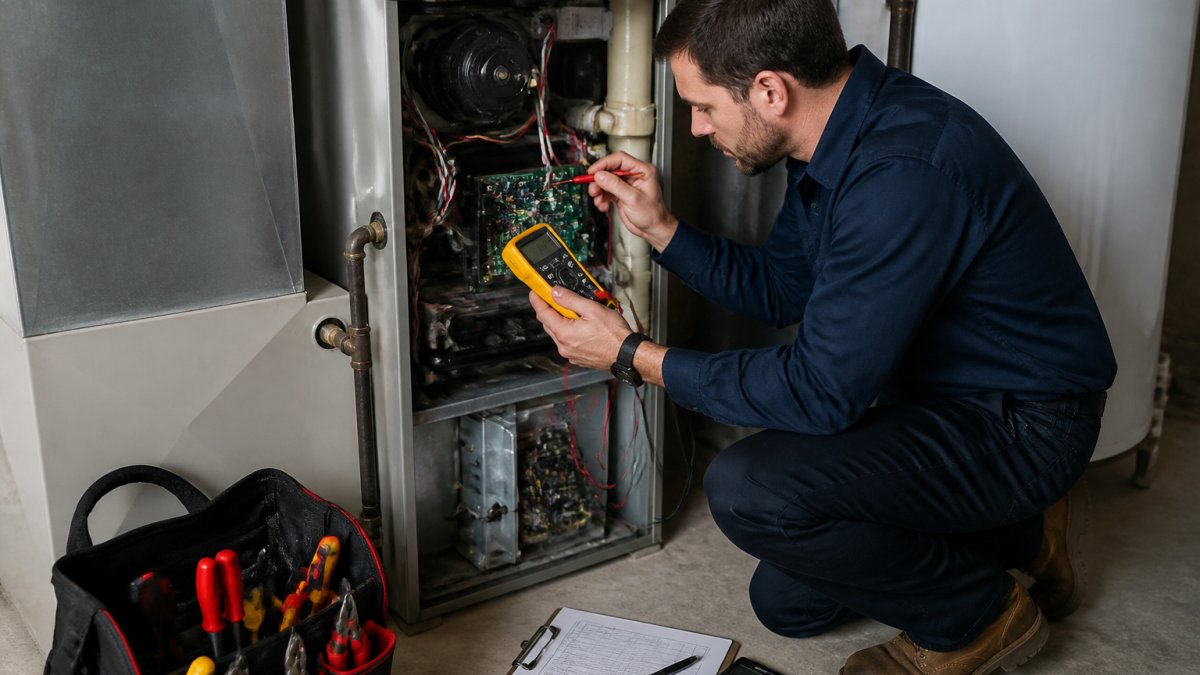
| Igniter or flame sensor | $150-$500 | Low | High | Part cost, diagnostic time |
| Control board | $400-$1,200 | Moderate to high | Moderate | Board cost, diagnostic time |
| Evaporator or condenser coil | $1,000-$3,000+ | High | High | Refrigerant, leak testing, labor hours |
| Refrigerant leak repair and recharge | $400-$1,500+ | High | High | Refrigerant type and amount, leak location |
| Compressor | $1,500-$3,500+ | High | High | Part cost, system evacuation and recharge |
| Heat exchanger | $1,500-$4,000+ | High | High | Safety testing, part cost, possible system limits |
These ranges are installed prices, meaning parts plus labor plus any refrigerant or disposal charges.
Cooling System Repairs: Capacitors, Compressors, and Coils
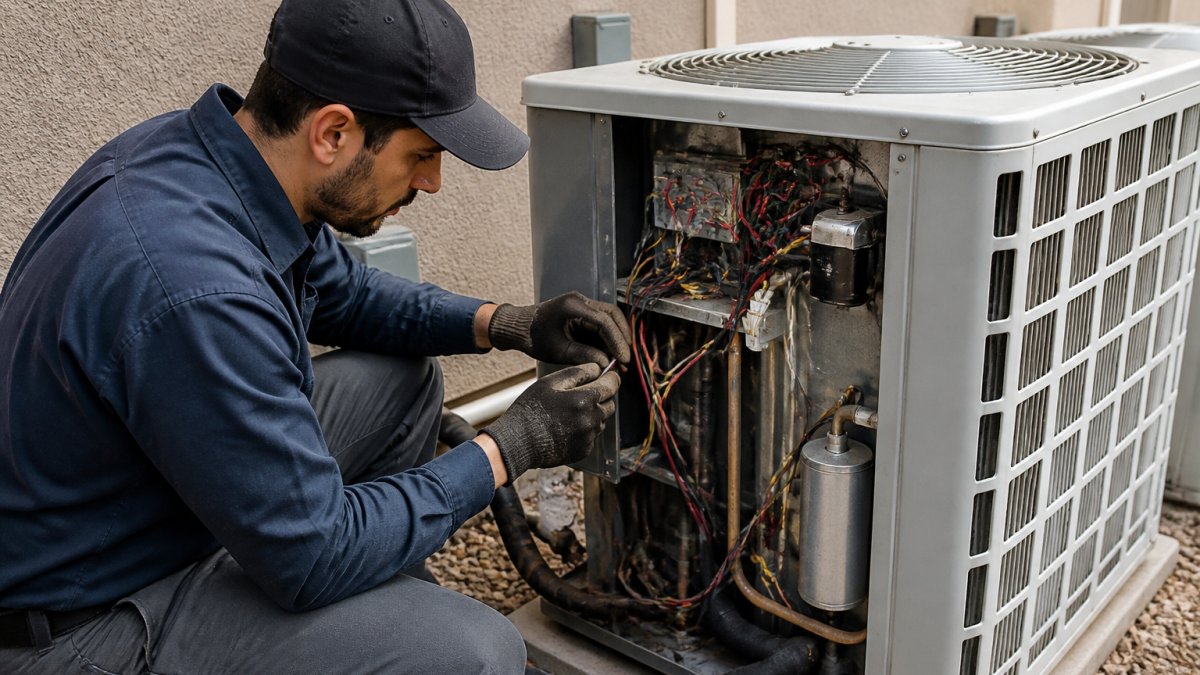
Cooling repairs range from the cheapest fix on the truck to the most expensive single component in the system. A failed capacitor is a minor repair: a small part, a short service visit, and the system is running again.
The U.S. Department of Energy guidance on air conditioning systems is clear that regular maintenance extends equipment life and avoids the premature failures that drive major repair bills.
A capacitor replacement is the classic minor repair: the part itself is inexpensive, and the bill is mostly the service visit.
Heating System Repairs: Furnace, Heat Pump, and Ignition Parts
Heating repairs follow the same logic but with different parts. Igniters, flame sensors, and control boards are common moderate repairs. The U.S. Environmental Protection Agency indoor air quality resources explain why combustion-related failures deserve immediate attention rather than a wait-and-see approach.
A heat pump sits in both worlds, since it heats and cools. That dual role means a heat pump service visit may involve diagnosing a reversing valve, a defrost board, or a compressor, all in one trip.
HVAC Diagnostic Fee and Service Call Charges
An HVAC diagnostic fee is the charge for the technician's time to identify the fault, and it is usually separate from the repair itself. Many contractors apply the fee toward the repair if you approve the work, while others bill it as a standalone service-call charge. Ask which model applies before you book.
- Standard service call: charged during normal business hours for travel and initial assessment
- Diagnostic fee: charged for the troubleshooting time that identifies the failed component
- After-hours and emergency rates: higher, because the visit displaces scheduled work
- Parts markup: the difference between the contractor's cost and the price on your invoice
What most homeowners miss is that the diagnostic fee is not the repair estimate. A good technician diagnoses first, then quotes the fix with the part and labor separated.
HVAC Repair Cost Factors That Change Your Bill
Several variables move the final number more than the part itself. System type matters: a packaged unit and a split system have different access and labor profiles. Unit age matters, because older equipment can have discontinued parts and longer sourcing times. System condition matters, since a neglected system often has more than one failure waiting.
Access is the factor nobody mentions. The U.S. Department of Energy home heating and cooling resources note that equipment efficiency and proper sizing affect long-term operating costs, which is worth weighing against a repair decision.
HVAC Repair vs. Replacement Cost: When to Choose Each
The repair-versus-replacement decision is the highest-stakes call in HVAC ownership. Repair keeps the current system running and preserves the remaining service life. Replacement resets the clock, improves efficiency, and eliminates repeat failures, but costs far more up front. The right answer depends on age, repair frequency, efficiency, and whether the repair is a one-off or the third visit this year.
Most practitioners use a simple framework rather than a single rule. Score the system on four inputs, then let the score point you toward repair, replacement, or a closer look.
A Four-Input Decision Framework
1. Age versus expected service life. A gas furnace typically lasts 15-20 years, a central air conditioner 12-15 years, and a heat pump 10-15 years.
2. Repair frequency. One repair in five years is normal wear. Two or three repairs in two years is a pattern.
**3. The U.S. Department of Energy home heating and cooling resources note that equipment efficiency and proper sizing affect long-term operating costs, which is worth weighing against a repair decision.
**4.
Worked Examples
-
6-year-old air conditioner, failed capacitor ($250 repair). Age is well inside expected life, repair cost is a small share of replacement, and the fix is a wear part. Repair.
-
14-year-old air conditioner, failed compressor ($2,500 repair). Age is past the midpoint, the repair is a sealed-system component, and the cost is a meaningful share of replacement. Get both quotes; replacement likely wins on total cost of ownership.
-
10-year-old furnace, cracked heat exchanger ($2,500+ repair). Safety issue plus major component plus mid-life equipment. Replacement is usually the safer and more economical call.
-
8-year-old heat pump, failed defrost board ($600 repair). Age is inside expected life and the repair is moderate. Repair, but ask whether the refrigerant type affects future service options.
-
Is the system past the midpoint of its expected service life?
-
Is this the second or third repair in two years?
-
Is the repair a sealed-system component rather than a wear part?
-
Are parts still available for the model?
-
Would a replacement meaningfully reduce operating costs?
If you check three or more boxes, get a replacement quote alongside the repair quote. At T. Gomes Heating & Cooling, we would rather show you both numbers than push you toward the larger invoice.
How to Compare HVAC Repair Estimates From Contractors
Comparing estimates is where homeowners gain or lose the most money. Read each quote for the same four things: the diagnosed fault, the part specified, the labor hours, and the warranty on the work. A quote that names a part number and a labor time is a professional document. A quote that says "repair system" is not.
- Confirm the diagnosis matches the symptom you described
- Check whether the part is OEM or aftermarket
- Ask how many labor hours are included
- Verify the warranty covers both parts and labor
- Confirm whether the diagnostic fee is credited toward the repair
Warranty, Insurance, and Financing Options for HVAC System Repair
Warranty coverage can change your out-of-pocket number dramatically. Manufacturer warranties typically cover parts for a defined period, while labor warranties come from the installing contractor. If your system was installed by another company, check whether the labor warranty transfers, because many do not.
Homeowner's insurance generally excludes mechanical breakdown, so do not expect a standard policy to cover a failed compressor. Some utility programs and state energy offices offer rebates or financing for efficiency upgrades, and the Database of State Incentives for Renewables and Efficiency tracks what is available.
Manufacturer financing and contractor payment plans spread a major repair or replacement across months. Ask about the terms in writing before committing.
Conclusion: Budgeting for HVAC System Repair in 2026
The challenge with HVAC budgeting is that failures arrive without warning, usually in the worst weather of the year. Set aside a repair reserve, keep your maintenance current, and get itemized estimates before approving any work. T. Gomes Heating & Cooling has served homeowners and commercial property managers since 2013 with licensed and insured technicians, competitive pricing, and a customer-centered approach that puts your interests first. Book now and get a clear, itemized estimate before you commit to anything.
Frequently Asked Questions
What is the average cost of HVAC system repair?
Most HVAC system repair bills vary depending on the fix. Minor fixes like a capacitor, igniter, or clogged drain line are typically less expensive. Mid-range jobs such as blower motors or control boards cost more, and major component failures like compressors or heat exchangers are the most significant investments. Your actual HVAC system repair cost depends on the part, labor rates in your area, the unit's age, and whether the visit is after hours. Get a written estimate before work starts.
What is the $5,000 HVAC rule?
The age-cost rule is a common contractor guideline: if the repair quote multiplied by the system's age exceeds a certain benchmark, replacement usually makes more financial sense. The rule is a starting point, not a verdict. Factor in efficiency gains, refrigerant type, warranty coverage, and how long you plan to stay in the home before deciding.
How much does an HVAC diagnostic fee cost?
An HVAC diagnostic fee typically covers travel and the technician's time to find the fault, and it varies depending on the market and time of day. Some contractors waive the fee if you approve the repair, while others bill it separately. Ask upfront whether the diagnostic fee is credited toward the repair and whether after-hours or weekend visits carry a surcharge before you book.
Is it worth repairing an AC that is 12 years old?
It can be, if the repair is minor and the system has been maintained. Once a unit passes 10 to 12 years, parts get harder to source and efficiency losses add up. Run the age-cost rule and compare the repair quote to the cost of a new system. If the repair is a significant portion of the price of replacement, or the same part has failed twice, replacement usually wins on total cost.
What factors affect HVAC repair costs the most?
The biggest HVAC repair cost factors are the failed component and its part price, labor rates in your region, system type and age, and access to the unit. Emergency or after-hours calls add a premium, and refrigerant recharges for older systems can be expensive due to phased-out refrigerants. A well-maintained system often needs smaller, cheaper repairs than one that has been neglected for years.
How can I tell if a repair estimate is fair?
A fair estimate itemizes parts and labor, states the diagnostic fee, and explains why the part failed. Ask for the part number and whether it is under warranty. Get two or three written quotes for major work, and be wary of a contractor who recommends full replacement without testing components. A licensed, insured company should put the scope in writing and answer questions without pressure.