 how-to
Common Causes of High Energy Bills: 7 Fixes That Work
Table of Contents
- Why Your Energy Bill Jumped: Start With a Bill Audit
- High Utility Bill Troubleshooting: Check These Causes First
- HVAC Problems That Cause High Energy Bills
- Air Leaks, Insulation, and Phantom Loads: Hidden Energy Drains
- How to Lower Energy Bills With a Prioritized Plan
- Schedule a Home Energy Audit to Find What You Missed
- When to Call Your Utility or an Electrician
- Frequently Asked Questions
Last Updated: October 22, 2026
Why Your Energy Bill Jumped: Start With a Bill Audit
Your bill doubled, but your habits didn't. That's the moment most people start guessing, and guessing usually costs money. At T. Gomes Heating & Cooling, we see this every fall: a homeowner convinced the furnace is failing when the real answer sits on page one of the statement. The most common causes of high energy bills rarely announce themselves. They hide in rate changes, billing periods, and slow equipment decline.
So start with a bill audit. It takes fifteen minutes and answers the question everyone skips: did you use more power, or did power simply cost more?
Separate Higher Usage From Higher Rates
A bill audit is a side-by-side comparison of two statements that separates how much energy you used from what you paid per unit. Pull last year's bill for the same month and compare three numbers: total kilowatt-hours (kWh), the rate per kWh, and the full billing period length.
- Usage up, rate flat: something in your home changed. More run time, new appliance, guests, weather.
- Usage flat, rate up: the utility raised prices or changed your rate plan. Nothing in your house is broken.
- Both up: usually weather plus a rate increase stacked together.
- Days up: a longer billing cycle can add a week of charges and look like a spike.
Check whether the meter reading says "actual" or "estimated." An estimated bill gets corrected later, and the correction often lands as a shock. Your utility's own billing and meter reading guidance explains how estimated reads work.
High Utility Bill Troubleshooting: Check These Causes First
High utility bill troubleshooting works best in order of cost and effort, not order of suspicion. The cheapest checks take minutes and rule out the biggest false alarms.
Work down this list before spending a dollar:
- Compare kWh, not dollars. Dollars hide rate changes.
- Read the billing period. Longer cycles inflate totals.
- Check for estimated readings. A correction may be coming.
- Look at the weather. A hot month means the air conditioner ran more.
- Walk the house at night. Look for lights and devices left running.
- Check the air filter. A clogged filter makes the system work harder.
- Look for new loads. A space heater, dehumidifier, or hot tub adds up fast.
Most homeowners find their answer in steps one through four. That's the part most guides get wrong: they jump straight to "buy a new system" before confirming the bill actually reflects higher usage.
HVAC Problems That Cause High Energy Bills
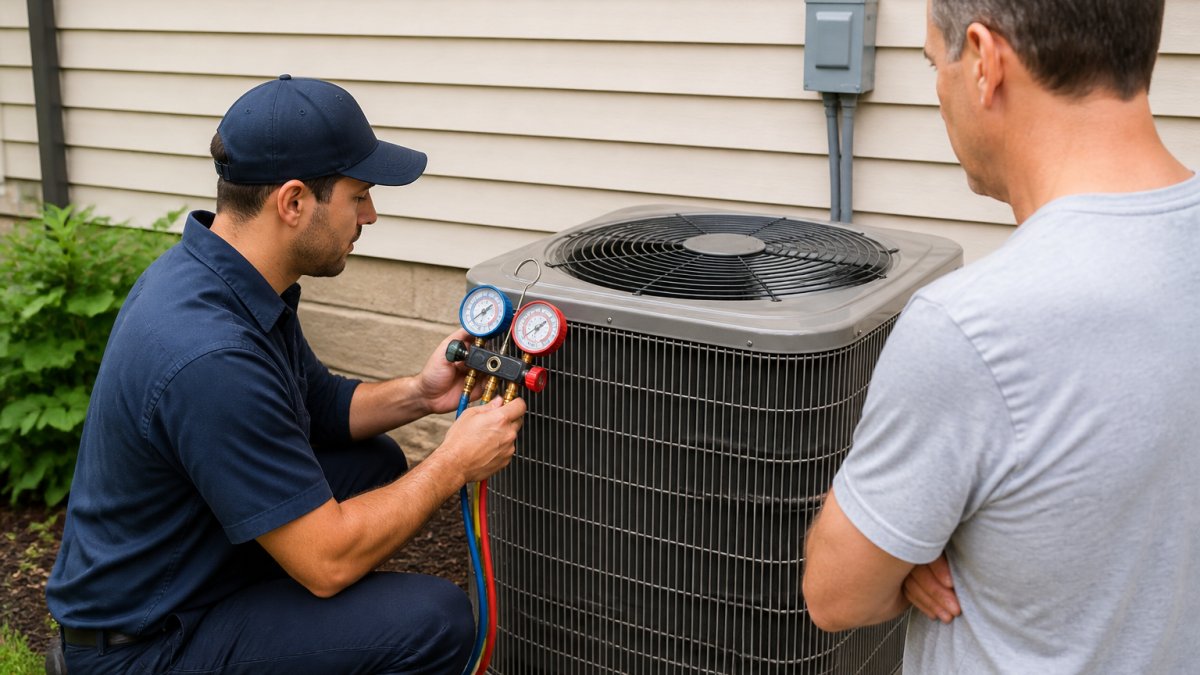
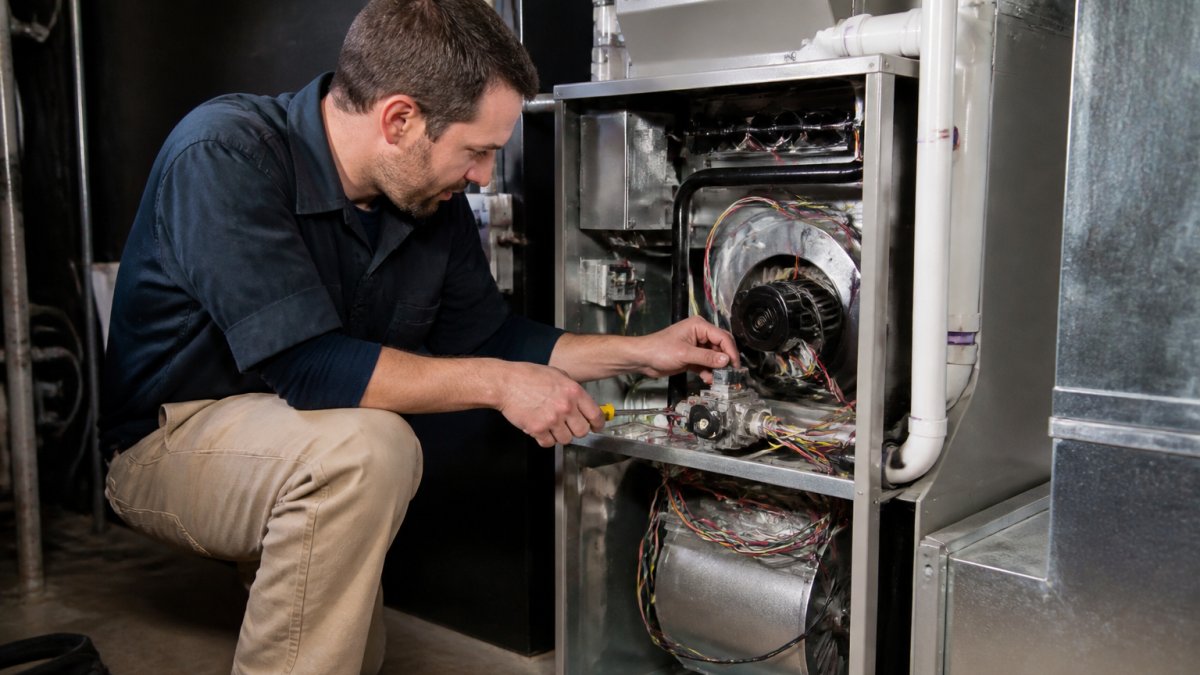
Heating and cooling is the largest energy user in most homes, so it's the first place to look when usage climbs. Several HVAC problems that cause high energy bills are invisible from the thermostat.
- Dirty filters: a clogged filter restricts airflow, so the blower runs longer to move the same amount of air. On a forced-air system, a filter that hasn't been changed in three months can add noticeable run time. This is the cheapest fix on the list and the one most often skipped.
- Low refrigerant: when the charge is low, the system can't absorb heat efficiently and runs continuously without reaching the set temperature. The symptom is a system that never shuts off on a hot day and blows air that is cool but not cold. Refrigerant doesn't get "used up", a low charge means a leak, and recharging without finding the leak just postpones the problem.
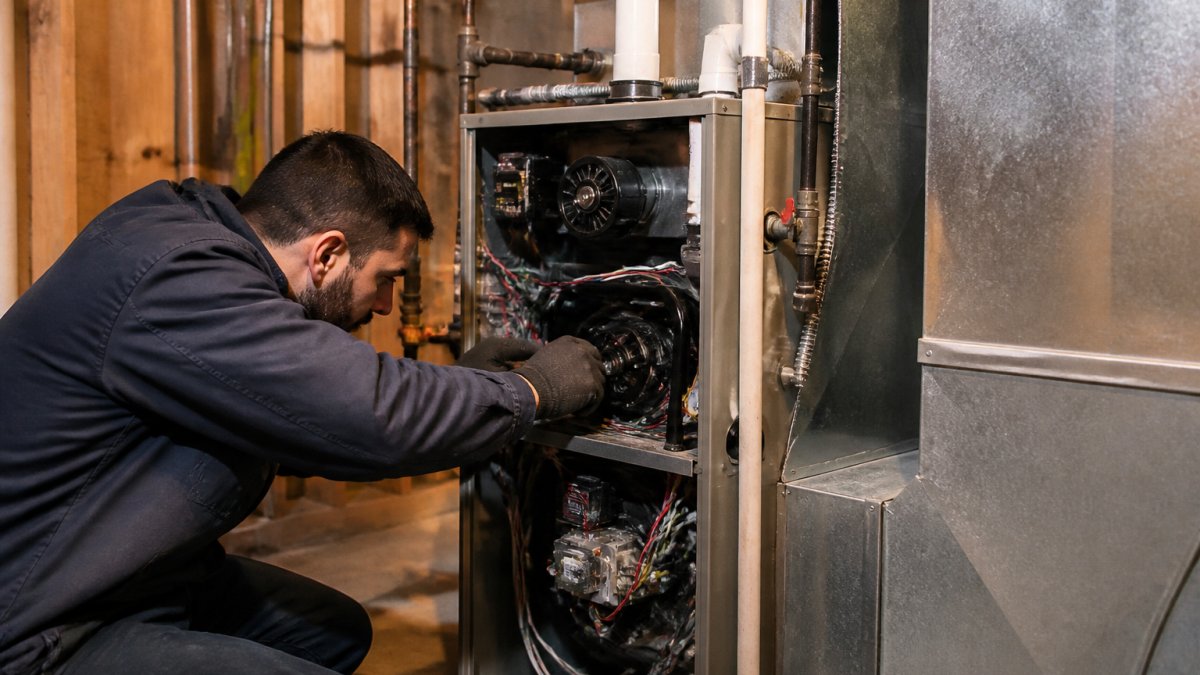
- Failing capacitors or blower motors: a weak capacitor makes the compressor or blower struggle to start, causing short cycles and long run times. A failing blower motor may run at reduced speed, cutting airflow and forcing the system to work harder. Both show up as a system that starts and stops more often than it used to.
- Duct leaks: in a typical home, a meaningful share of conditioned air can escape through leaks in ducts that run through attics, crawlspaces, or garages. That air is paid for twice, once to condition it and again to condition the space it never reached. Leaky ducts in unconditioned spaces are one of the most common hidden causes of a high bill.
- An aging system: efficiency drops as equipment wears out. A system that was rated at a certain efficiency when new will not hit that number after a decade of use. If the system is old, needs frequent repairs, and the bill is climbing, replacement math starts to make sense.
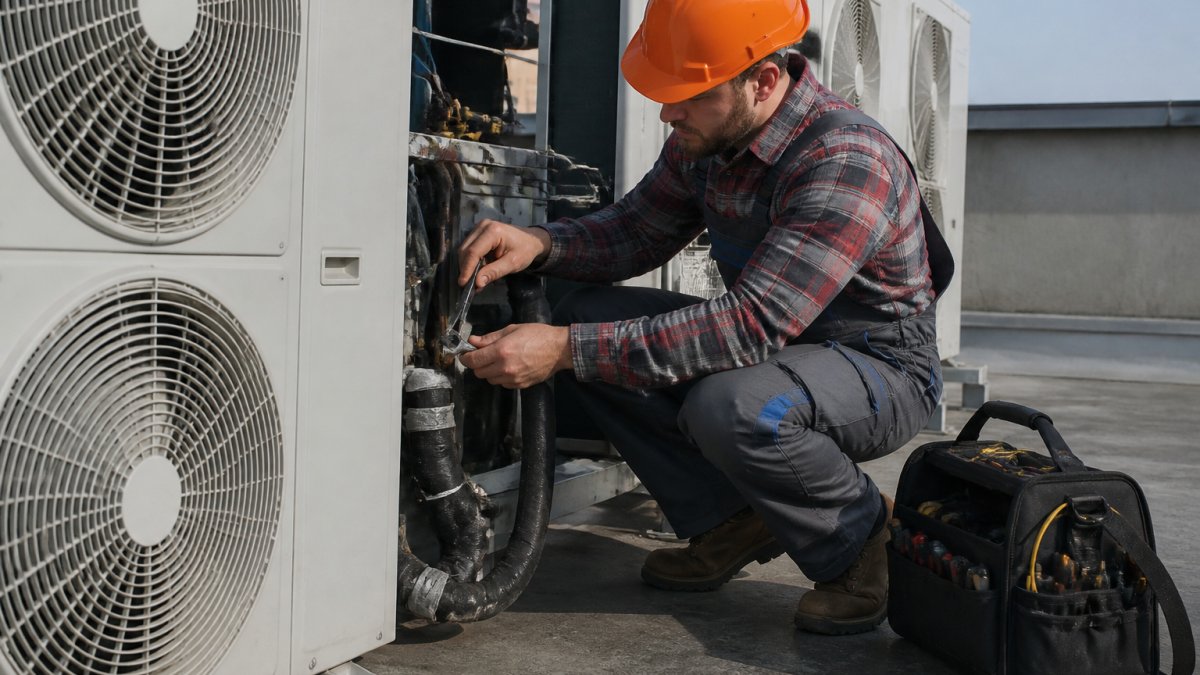
A system that short-cycles is a classic culprit. It starts, stops, and restarts, burning energy without ever settling into efficient operation. Short cycling also wears out the compressor faster, so it's a problem that gets more expensive the longer it's ignored. If your outdoor unit runs nonstop on a mild day, that's a signal worth acting on.
A simple diagnostic order helps here. First, check the filter, it's free and rules out the most common cause. Second, watch the system through one full cycle: does it reach the set temperature, or does it run and run? Third, listen for short cycling and check whether the outdoor unit ices up.
The cost trade-off matters. A filter change costs a few dollars and takes minutes. A capacitor or blower motor repair is a modest service call. A refrigerant leak repair depends on where the leak is. Duct sealing is a medium-cost job that often pays back over a few seasons. A full system replacement is the largest expense and should be the last option, not the first, which is why the cheap checks come first.
Air Leaks, Insulation, and Phantom Loads: Hidden Energy Drains
If your HVAC checks out, the next suspects are the ones you can't see. Air leaks around windows, doors, and outlets let conditioned air escape.
The mechanism is simple. In summer, hot attic air leaks into the living space and cool air leaks out, so the air conditioner runs longer to hold the set temperature.
A quick way to find the worst leaks without special tools: on a windy day, hold a tissue near the edges of doors, windows, and outlets on exterior walls.
Then there are phantom loads: devices that draw power even when switched off. Televisions, cable boxes, game consoles, chargers, and smart speakers all sip electricity around the clock. Individually they're small.
Try this tonight:
- Unplug entertainment centers and chargers before bed for one week.
- Note the daily kWh change on your meter.
- Multiply the difference by your rate.
That number tells you whether standby power is worth chasing.
A prioritized order keeps the effort proportional to the payoff. Start with the free checks: the tissue test for air leaks and the one-week phantom load test.
How to Lower Energy Bills With a Prioritized Plan
Knowing how to lower energy bills comes down to sequencing. Spend on the cheap fixes first, measure the result, then decide whether bigger work is justified.
| Priority | Action | Effort | Typical Impact |
|---|---|---|---|
| 1 | Change air filters monthly | Low | Restores airflow, cuts run time |
| 2 | Seal gaps around doors and windows | Low | Reduces air leaks |
| 3 | Switch to LED bulbs | Low | Cuts lighting load |
| 4 | Unplug phantom loads | Low | Trims baseline usage |
| 5 | Add attic insulation | Medium | Slows heat transfer |
| 6 | Seal and test ductwork | Medium | Recovers lost conditioned air |
| 7 | Service or replace HVAC system | High | Restores efficiency |
Start at the top. Each row costs less and takes less time than the one below it. If your usage stays high after rows one through four, the problem is likely in the equipment or the building shell, and that's when a professional inspection pays for itself.
Schedule a Home Energy Audit to Find What You Missed
A home energy audit is a professional inspection that finds where your house loses energy and which fixes deliver the most savings. An auditor checks insulation levels, air sealing, duct condition, appliance efficiency, and how your HVAC system actually performs under load.
Why bother? Because guessing gets expensive. A blower door test shows exactly how leaky the house is. Thermal imaging reveals missing insulation behind walls. Those findings turn a vague worry into a ranked list.
If your bill audit and your own checks point to the HVAC system, a licensed technician can confirm it. T. Gomes Heating & Cooling has served homeowners and small commercial properties since 2013, and our team is licensed and insured. We'd rather tell you a filter change solves it than sell you a system you don't need.
When to Call Your Utility or an Electrician
Some problems aren't HVAC problems, and no amount of tuning will fix them. Call your utility when the meter reading doesn't match your usage, when a bill looks estimated, or when you suspect a billing error. Utilities can re-read meters and explain rate changes.
Call an electrician, not an HVAC contractor, when you notice:
- Warm or discolored outlets and switch plates
- A burning smell near the panel
- Breakers that trip repeatedly
- Flickering lights across multiple rooms
Faulty wiring wastes energy and creates real safety risk. Per electrical safety guidance from the U.S. Consumer Product Safety Commission, repeated breaker trips and warm outlets deserve prompt attention.
Frequently Asked Questions
What are the most common causes of high energy bills?
The biggest culprits are usually heating and cooling problems, poor insulation and air leaks, aging or inefficient appliances, phantom loads from devices on standby, and outdated lighting. Seasonal demand from heat waves also pushes usage up. Before assuming the worst, compare your current kilowatt-hour (kWh) usage to the same month last year. If usage is flat but the bill climbed, the cause is likely a rate increase or a change in your utility's billing structure rather than something in your home.
Can a faulty HVAC system cause a high electric bill?
Yes. A system with low refrigerant, a failing compressor, dirty filters, or duct leaks has to run longer to reach the thermostat setpoint, and that extra runtime shows up as higher energy consumption. An aging air conditioner past its expected service life is especially prone to this. If your HVAC problems that cause high energy bills seem to be recurring, schedule a professional inspection before the next heat wave. A technician can measure how well the system is performing and flag repairs that pay for themselves.
How do I find out which appliances are using the most energy?
Start with a plug-in electricity usage monitor, which costs about $25 to $40 at most hardware stores. Plug individual appliances into it for a day or a week and it reports kilowatt-hour (kWh) consumption. Focus on the refrigerator, space heaters, dehumidifiers, and any appliance more than 10 years old. You can also compare your meter reading against a period when a suspect appliance is unplugged. This is one of the fastest steps in high utility bill troubleshooting, and it takes an afternoon.
How can I lower energy bills without a big upfront cost?
Start with the free and cheap fixes first. Seal air leaks around windows and doors with weatherstripping and caulk, change HVAC filters monthly during peak season, and set the thermostat a few degrees higher in summer and lower in winter. Unplug devices on standby and switch to LED bulbs. These steps often cut household energy use noticeably before you spend anything on appliance upgrades. If you want a ranked list of what to fix next, a home energy audit gives you one based on your actual house.
A high bill is a symptom, not a diagnosis. Audit the statement first, rule out rate changes and billing quirks, then work down the cheap fixes before spending big. If your HVAC system turns out to be the cause, T. Gomes Heating & Cooling can help. Our licensed and insured team offers full-spectrum repairs, installations, and maintenance, with competitive pricing and a customer-first approach. Book Now and get a straight answer about what's driving your bill.