 how-to
Emergency Furnace Repair in Warwick RI: What to Expect
Last Updated: October 30, 2026
Quick Summary
Emergency furnace repair in Warwick covers any heating failure that threatens safety, health, or your home, including no heat at or below freezing, a gas smell, or a carbon monoxide alarm. For gas or CO issues, evacuate and call your gas utility or 911 first. Otherwise, work the no-heat checklist, then call a licensed provider.
- Rhode Island law requires HVAC work, including emergency repairs, to be done by or under a licensed professional.
- Shut the system off and call for service if you see soot, scorching, or repeated flame rollout.
- A clogged filter can overheat the heat exchanger and trip the high-limit switch.
- Ask for the diagnostic fee and after-hours rate before you book the call.
- Consider replacement when repair costs approach a new system or the unit fails repeatedly.
Table of Contents
- What Counts as a Furnace Emergency in Warwick
- No-Heat Furnace Troubleshooting Before You Call
- Furnace Safety Checks Every Homeowner Should Know
- What 24-Hour Furnace Repair Looks Like When You Call
- Furnace Repair Cost Factors in Rhode Island
- Repair or Replace: Making the Call on an Aging System
- Booking Emergency Furnace Repair in Warwick
- Frequently Asked Questions
What Counts as a Furnace Emergency in Warwick
A furnace emergency is any heating failure that threatens safety, health, or the structural integrity of your home, and it demands immediate professional attention.
Here's the distinction that matters. Rhode Island law is equally clear on who can touch the equipment: under Rhode Island General Laws Chapter 5-20.5, HVAC work, including emergency repairs, must be performed by or under the direct supervision of a licensed professional.
These situations are treated as true emergencies:
- No heat at all when outdoor temperatures are at or below freezing
- A gas smell anywhere near the furnace or water heater
- A carbon monoxide alarm sounding in the home
- Visible soot, scorching, or a burning smell from the unit
The gas and carbon monoxide items are not repair calls. They are evacuate-and-call situations. Get everyone outside, then call your gas utility's emergency line and 911 if anyone feels ill.
These are the situations the article treats as true furnace emergencies in Warwick.
| Situation | How to respond |
|---|---|
| No heat at all at or below freezing | Urgent; work the no-heat checklist |
| Gas smell near furnace or water heater | Evacuate and call the gas utility |
| Carbon monoxide alarm sounding | Get everyone outside, call 911 |
| Visible soot, scorching, or burning smell | Shut system off and call for service |
| Repeated flame rollout or tripped breaker | Shut system off and call for service |
| Boiler leaking water onto the floor | Treated as a true emergency |
No-Heat Furnace Troubleshooting Before You Call
Before you dial anyone, run this checklist. It resolves a surprising share of no-heat calls, and it costs nothing. More importantly, it tells you whether you are dealing with a nuisance fault or a genuine hazard that requires you to shut the system down and get out of the house.
The five-minute homeowner checklist
- Check the thermostat. Confirm it's set to Heat, the setpoint is above room temperature, and the batteries aren't dead. A thermostat in Cool mode or with a schedule override is one of the most common false alarms.
- Replace the filter if it's clogged. A choked filter restricts airflow, overheats the heat exchanger, and trips the high-limit switch. Hold the filter up to a light; if you can't see through it, replace it.
- Inspect the breaker. Reset a tripped breaker once. If it trips again, stop and call a technician. A breaker that keeps tripping points to a shorted component or a failing blower motor, not a nuisance trip.
- Confirm the gas supply. Is the shutoff valve at the furnace open (the handle should run parallel to the pipe)? Has the utility interrupted service or is another gas appliance also out?
- Check the condensate line on a high-efficiency unit. A frozen or blocked drain triggers a pressure-switch lockout, and the furnace will not fire until the line is cleared.
Match the symptom to the urgency
Not every no-heat call is the same. Use this triage to decide whether you troubleshoot, schedule a repair, or evacuate.
- No heat, no unusual smell or sound. Work the checklist above. If it doesn't restore heat, schedule a repair. This is urgent in cold weather but not an immediate hazard.
- A gas smell near the furnace or water heater. Do not touch the thermostat or any switch. Leave the home, call your gas utility's emergency line from outside, and call 911 if anyone feels ill. This is an evacuate-and-call situation, not a repair call.
- A carbon monoxide alarm sounding. Get everyone outside immediately, including pets. Call 911 and the gas utility. Do not re-enter until emergency responders clear the home.
- Visible soot, scorching, or a burning smell from the unit or vents. Shut the system off at the thermostat and the breaker, and call for service. Soot and scorching indicate incomplete combustion or overheating.
- Loud banging, booming, or screeching. Shut the system down. A booming sound can signal delayed ignition, and a screech usually means a failing blower bearing. Both warrant a prompt service call.
Furnace Safety Checks Every Homeowner Should Know
Carbon monoxide is the reason furnace safety checks aren't optional. It's colorless, odorless, and produced by any fuel-burning appliance that isn't venting correctly.
Run these checks monthly during heating season:
- Test every carbon monoxide alarm and confirm the batteries are fresh
- Look for soot streaks, rust, or corrosion on the flue pipe
- Check that the flame burns blue, not yellow or orange
- Keep the area around the furnace clear of stored boxes and paint cans
- Verify the vent pipe connections are tight and undamaged
Watch out: never tape over, block, or "seal" a cracked heat exchanger or a suspected flue leak to get through a cold night. That's a carbon monoxide path into your living space, and it's the one shortcut that can be fatal.
What 24-Hour Furnace Repair Looks Like When You Call
A typical furnace repair call follows five stages: phone triage, dispatch, diagnostic inspection, a written repair estimate, and the repair itself.
Stage 1: Phone triage
When you call, we ask about the symptoms, the fuel type, the age of the system, and whether you smell gas or have a carbon monoxide alarm sounding. That triage does two things: it tells us what parts and tools to load on the truck, and it tells you whether to shut the system down immediately. If you report a gas smell or a CO alarm, the dispatcher will tell you to leave the home and call the utility first.
Stage 2: Dispatch
After-hours calls are routed to the on-call technician. You should receive an arrival window, not just a promise to "be there soon." Ask for the technician's name and the expected arrival time so you can plan. If the call is a genuine safety hazard, it moves to the front of the queue.
Stage 3: Diagnostic inspection
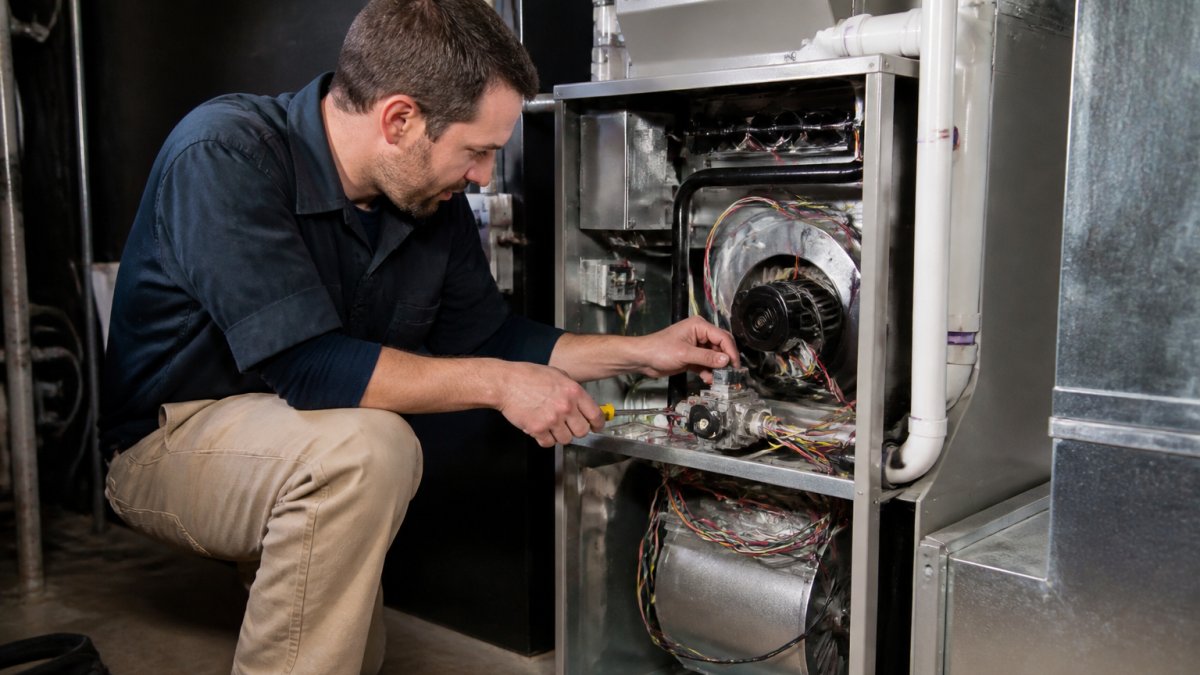
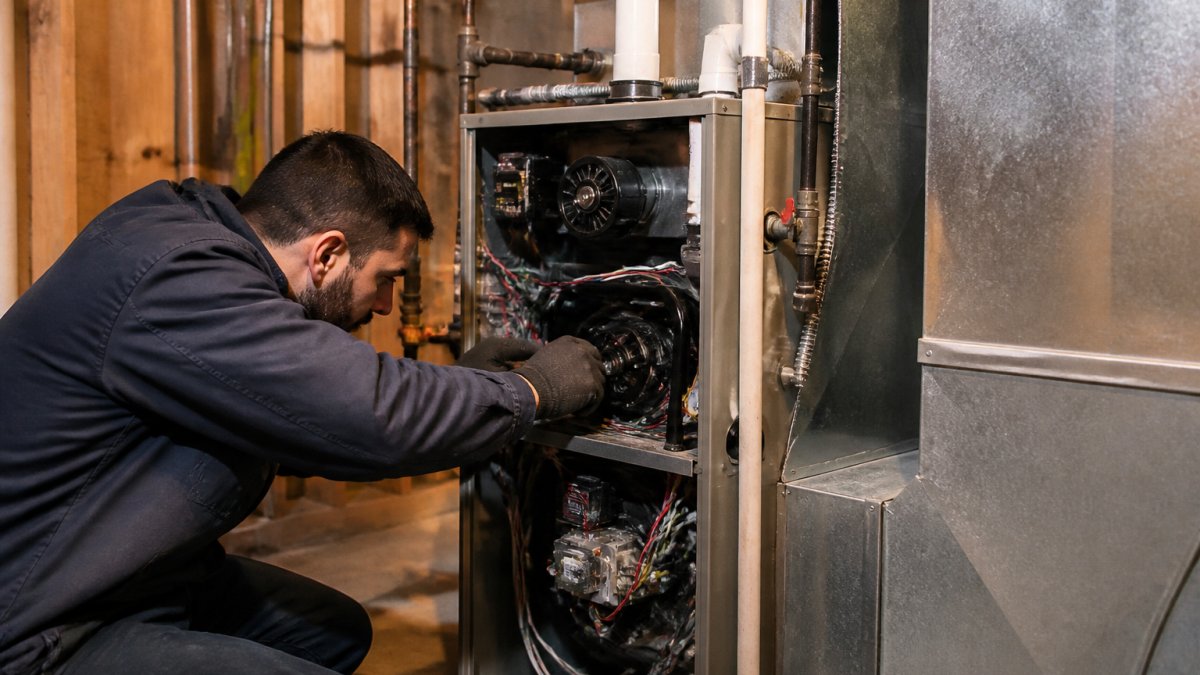
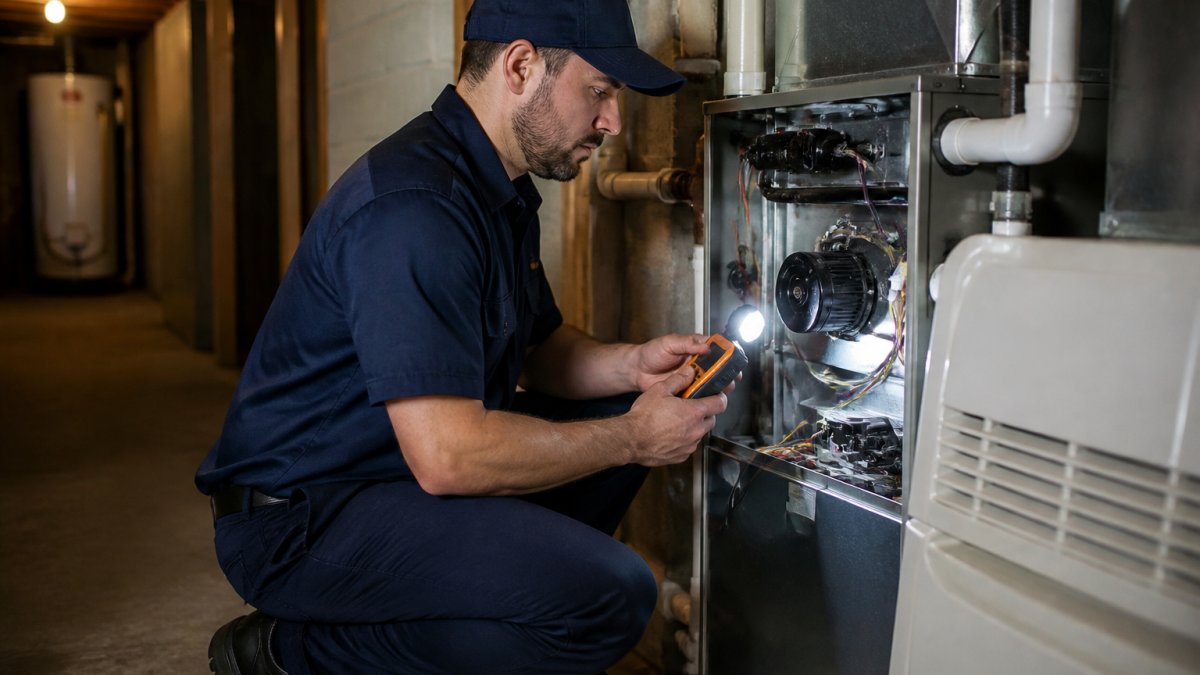
A furnace inspection typically checks the thermostat call for heat, safety switches, ignition sequence, flame sensor, blower operation, and flue and venting. A furnace that locks out on a pressure switch, for example, may have a blocked condensate line, a failing inducer motor, or a cracked heat exchanger, and each has a different repair.
Stage 4: Written repair estimate
You approve the repair estimate before work begins. The estimate should list the failed component, the part cost, the labor, and any after-hours or diagnostic fee. If the technician finds a safety hazard such as a cracked heat exchanger, they should explain why the system must stay off until the repair is made. You should never feel pressured to approve work you don't understand.
Stage 5: Repair and testing
If you want the full picture of what a visit covers, see our furnace repair service.
Furnace Repair Cost Factors in Rhode Island
Furnace repair cost in Rhode Island depends on the failed component, the fuel type, the age of the system, and whether the call falls after hours. Flat prices vary because a thermocouple swap and a blower motor replacement are not the same job.
What drives the bill:
- Part cost. Igniters, flame sensors, and control boards sit at very different price points.
- Labor time. A diagnostic inspection is quick; a heat exchanger job is not.
- Access. A furnace wedged into a cramped crawlspace takes longer than one with clear clearance.
- Timing. Weekend, holiday, and overnight service usually carries a premium.
- Fuel type. Gas furnace work and oil-fired boiler repair involve different parts and procedures.
Ask for the diagnostic fee and the after-hours rate before you book, and get the repair estimate in writing.
Repair or Replace: Making the Call on an Aging System
A furnace is often worth replacing when repair costs approach the price of a new system, or when it is past its typical service life and failing repeatedly.
Age isn't the only signal. Consider replacement when you see a cracked heat exchanger, rising gas bills with no change in habit, or a third breakdown in two winters. A system that quits every January is telling you something.
If you're weighing options, explore our HVAC maintenance plans to extend the life of a unit worth keeping. If replacement is the better call, review our HVAC installation services. Income-eligible homeowners should also check the Heating System Repair and Replacement Program, which offers one-time help to improve heating efficiency for qualifying Rhode Island households.
Booking Emergency Furnace Repair in Warwick
Book emergency furnace repair in Warwick by calling a licensed local provider directly and confirming two things: that they offer after-hours service, and that they'll quote before they repair.
We've operated since 2013 as a licensed and insured team, serving homeowners and businesses in the Warwick area. Customers have described our technicians as "extremely fast, friendly, and effective."
When your heat fails, contact our team and tell us what the furnace is doing.
Frequently Asked Questions
What should I do if my furnace stops working?
Check the thermostat first: make sure it is set to heat and the batteries are fresh. Confirm the furnace switch and breaker are on, and replace a clogged filter. If the system still will not fire, stop and call a licensed technician. Rhode Island law requires HVAC work, including emergency repairs, to be performed by or under the direct supervision of a licensed professional, so skip any repair that involves opening the unit.
How much does emergency furnace repair typically cost?
Furnace repair cost depends on the failed part, the system's age and fuel type, and whether the call falls after hours. A simple ignition or filter issue costs far less than a blower motor or heat exchanger job. Ask for a diagnostic inspection fee and a written repair estimate before work begins. Call for a quote rather than guessing.
Is it safe to run a furnace that is making unusual noises?
Banging, screeching, or rumbling usually points to a mechanical problem that gets worse with use. If you also smell gas or burning, shut the system off at the thermostat and call for emergency furnace repair immediately. Do not keep running a furnace that is loud or cycling oddly while you wait for a technician, because a small failure can turn into a cracked heat exchanger or a no-heat night.
What should I do if I smell gas near my furnace?
Leave the building, do not flip switches or use your phone inside, and call your gas utility's emergency line from a safe distance. Once the leak is addressed, a licensed technician should perform furnace safety checks before the system is restarted. Carbon monoxide and gas leaks are the two situations where you never troubleshoot alone, even if the furnace otherwise seems to be running fine.
Does homeowners insurance cover furnace repairs?
Most policies cover sudden, accidental damage, such as a burst pipe that ruins the furnace, but not wear-and-tear failures or routine maintenance. Read your policy or call your agent before assuming coverage. Income-eligible Rhode Island homeowners may wish to check state assistance programs for heating system efficiency.
A furnace failure in the middle of a Rhode Island cold snap is stressful, and the last thing you need is a vague promise and a long wait. T. Gomes Heating & Cooling provides licensed, insured emergency response with upfront diagnostics, written estimates, and technicians who explain the problem before they fix it. Get started with T. Gomes Heating & Cooling and get your heat back on.