 how-to
How to Troubleshoot Furnace Issues Before Calling a Pro
Last Updated: November 5, 2026
Quick Summary
To troubleshoot furnace issues, start with safety: shut off the gas if you smell it, cut power before opening panels, and check the thermostat, power switch, breaker, and air filter first. If the breaker trips twice or a rollout switch trips, stop and call a licensed technician.
- A clogged air filter is the most common cause of a furnace that runs but won't heat well.
- Count the LED flashes through a full cycle before matching the pattern to the fault-code label.
- Never press a gas furnace reset button more than twice, because unburned gas can build up.
- Clean a dirty flame sensor gently with fine steel wool to restore normal operation.
- Replace the filter every one to three months depending on pets and dust.
Table of Contents
- Start With Safety: What to Check Before You Troubleshoot Furnace Issues
- The Tools You Need for Basic Furnace Troubleshooting Step by Step With Multimeter Checks
- Thermostat Settings, Power Supply, and Circuit Breaker Checks
- Air Filters, Vents, and Registers: The Airflow Fixes That Solve Most Calls
- Where Is the Furnace Reset Button and When Should You Press It?
- Pilot Light, Ignition, and Flame Sensor Problems on a Gas Furnace
- Reading Blinking LED Error Codes and Using a Gas Furnace Troubleshooting Flowchart
- The Top 5 Furnace Problems Homeowners Face
- Book a Furnace Diagnostic With T. Gomes Heating & Cooling
- Frequently Asked Questions
Start With Safety: What to Check Before You Troubleshoot Furnace Issues
A cold house pushes people to skip steps, and that is when mistakes happen. Before you troubleshoot furnace issues, rule out the hazards: shut off the gas at the valve if you smell rotten eggs, never open a blower panel while the power is on, and call a professional immediately if you see soot, scorch marks, or a cracked heat exchanger. Carbon monoxide is odorless, so install a CO alarm near sleeping areas if you don't have one (Carbon Monoxide Fact Sheet). The U.S. Consumer Product Safety Commission guidance on carbon monoxide safety explains why this step comes first.
If the problem feels urgent or unsafe, stop. Learn what emergency furnace repair in Warwick RI involves before you touch anything else.
Here is a quick safety checklist:
- Confirm the CO alarm works
- Shut the gas valve if you smell gas
- Turn off power at the breaker before opening panels
- Keep children and pets away from the unit
- Never bypass a safety switch
The Tools You Need for Basic Furnace Troubleshooting Step by Step With Multimeter Checks
A screwdriver, a flashlight, a digital multimeter, a spare filter, and a soft brush cover cover many basic checks. A furnace troubleshooting step by step with multimeter approach works like this: set the meter to voltage, test the incoming power, then test continuity on switches and sensors.
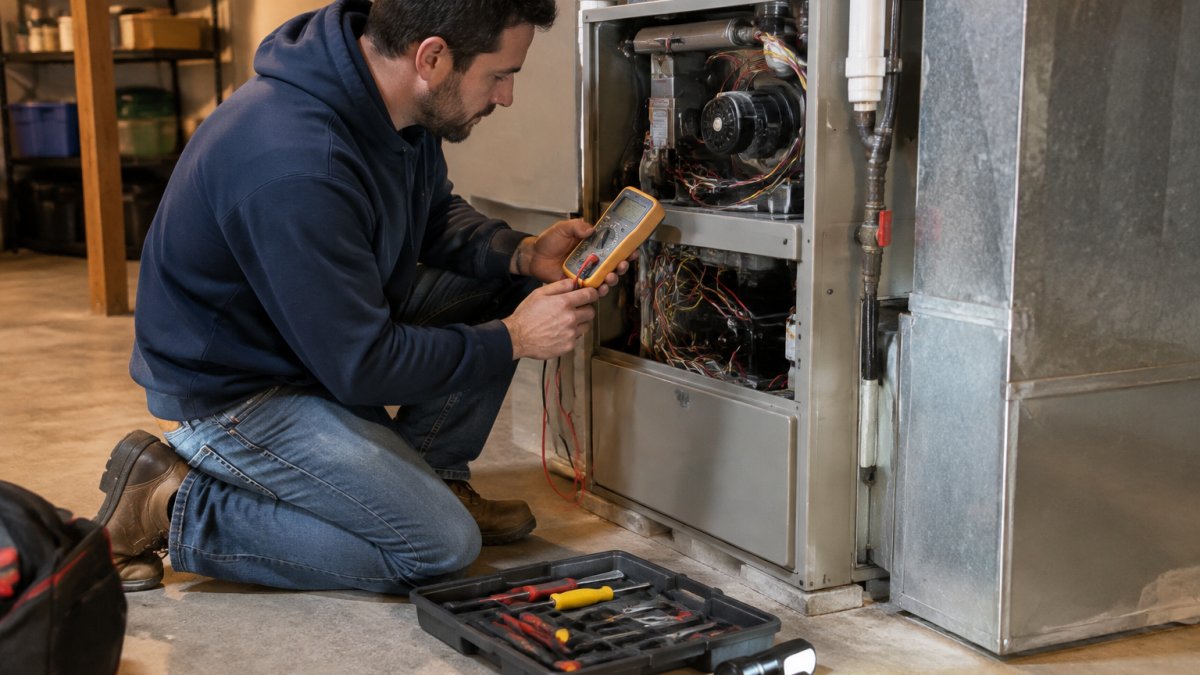
Here is what each tool does:
- Multimeter: checks voltage and continuity
- Flashlight: lights up the burner and blower area
- Screwdriver: opens panels and tightens wire connections
- Spare filter: restores airflow fast
A common mistake is testing continuity while the power is still on. Always cut power first.
Thermostat Settings, Power Supply, and Circuit Breaker Checks
Start with the simplest cause, because it is often the answer. Confirm the thermostat is set to Heat and the temperature is above room level. Then check the power switch near the furnace, and reset the circuit breaker if it tripped. A furnace that has no power at all usually points to a breaker, a switch, or a blown fuse, not a broken blower motor.
Work through it in this order:
- Set the thermostat to Heat and raise the setpoint.
- Replace thermostat batteries if the screen is blank.
- Flip the furnace power switch to On.
- Reset the breaker once, then stop if it trips again.
- Check the low-voltage fuse on the control board.
If the breaker trips a second time, that is an electrical fault. Leave it to a licensed HVAC technician.
Air Filters, Vents, and Registers: The Airflow Fixes That Solve Most Calls
A clogged air filter is the single most common cause of a furnace that runs but won't heat well. Restricted airflow can overheat the limit switch, which shuts the burner down and causes short cycling. Replace the filter, then walk the house and open every supply register and return vent you find blocked by furniture, rugs, or closed dampers.
Airflow problems show up in predictable ways:
- Weak heat from some vents but not others
- The furnace starts, runs briefly, then stops
- The blower motor sounds strained
- Rooms far from the furnace stay cold
Fixing airflow is cheap and fast. It also lowers energy use, because a furnace fighting a blocked filter runs longer than it should. If you want to know whether a symptom means a real fault, this guide on how to tell if your furnace needs repair walks through the warning signs.
Where Is the Furnace Reset Button and When Should You Press It?
The furnace reset button is a small switch on or near the blower housing, usually behind the lower access panel. Press it once after the furnace cools, then watch what happens. If the furnace fires and runs normally, a one-time trip from a power blip is the likely cause. If it shuts down again, stop pressing it.
Repeated resets hide a real problem. A limit switch that keeps tripping points to airflow, a failing blower motor, or a blocked flue. For gas units, the reset button near the burner should never be pressed more than twice, because unburned gas can build up.
Watch out: pressing the reset button over and over can flood the combustion chamber with gas. If it trips twice, call a professional.
Pilot Light, Ignition, and Flame Sensor Problems on a Gas Furnace
A gas furnace that clicks but won't light usually has an ignition or flame sensor problem. Older units use a standing pilot light and a thermocouple. Newer units use an electronic ignition system and a flame sensor that proves the burner lit. A dirty flame sensor is a frequent culprit, and cleaning it gently with fine steel wool often restores normal operation.
Check these in order:
- Confirm the gas valve is open
- Look for a lit pilot flame on older units
- Watch for the ignitor glowing during a call for heat
- Clean the flame sensor if the burner lights then drops out
If you smell gas at any point, stop and leave the house. Do not troubleshoot combustion problems yourself.
Reading Blinking LED Error Codes and Using a Gas Furnace Troubleshooting Flowchart
Blinking LED error codes are the furnace telling you what failed. Most control boards flash a pattern, pause, then repeat. The single most important habit is to count the flashes through a full cycle before you touch anything, because the pattern often repeats every three to five seconds and a partial count sends you to the wrong part.
Where to find the code chart: the manufacturer's fault-code label is usually glued to the inside of the blower door or printed in the installation manual. Read that label first. The table below covers the patterns most residential control boards use, but treat it as a starting point, not a substitute for the label on your unit.
| Flash Pattern | Common Meaning | First Check | Safety Note |
|---|---|---|---|
| 1 flash | Ignition lockout after failed tries | Gas valve open, ignitor glowing, flame sensor clean | Do not keep resetting; unburned gas can accumulate |
| 2 flashes | Pressure switch not proving | Flue blockage, inducer motor running, condensate trap | A blocked flue can spill combustion gas into the home |
| 3 flashes | Limit switch open | Air filter, blocked registers, blower wheel | Repeated trips point to airflow, not the switch |
| 4 flashes | Flame sensed without a call for heat | Flame sensor, gas valve leaking, control board | Stop and call a professional if the burner stays lit |
| 5 flashes | Rollout switch open | Heat exchanger, burners, flue | This is a combustion safety fault; do not reset |
| Continuous flash | Control board fault | Low-voltage wiring, board fuse, transformer | Cut power before opening the panel |
| Steady on, no flash | Board powered but no call | Thermostat wiring, thermostat batteries | Confirm the thermostat is actually calling for heat |
A gas furnace troubleshooting flowchart follows the same logic, and you can run it in order without guessing:
- Is there power? Confirm the furnace switch is on and the breaker has not tripped. No power means the board cannot flash a code at all.
- Is the thermostat calling? Set it to Heat and raise the setpoint above room temperature. A blank screen usually means dead batteries.
- Is airflow clear? Check the filter and the registers before you chase electrical faults, because a dirty filter trips the limit switch and mimics a board failure.
- Is the inducer running? On a gas unit, the draft inducer should start before ignition. If it hums but does not spin, the pressure switch will never prove.
- Is there ignition? Watch for the ignitor glowing, then for the burner lighting. A burner that lights and drops out within seconds points to the flame sensor.
- What is the code? Match the flash pattern to the label or the table, then test that circuit with a multimeter before replacing any part.
Match the code before you replace any part. Guessing wastes money, and on combustion faults it wastes safety margin. Watch out: a rollout switch or limit switch that trips repeatedly is reporting a real hazard, not a nuisance, so never bypass it to keep the heat on.
The Top 5 Furnace Problems Homeowners Face
Common furnace problems include dirty filters, thermostat faults, ignition and flame sensor issues, short cycling, and blocked vents. Most of these trace back to airflow or power, and most are fixable before a technician arrives. What separates a one-time fix from a repeat service call is understanding the mechanism behind each one, so here is the same list with the why and the proactive check that prevents it.
- Clogged air filter. A loaded filter raises static pressure, reduces airflow across the heat exchanger, and trips the high-limit switch. The furnace then shuts the burner down mid-cycle. Replace it every one to three months depending on pets and dust, and check it monthly during heating season. A clean filter is the cheapest efficiency upgrade in the house.
- Thermostat problems. Wrong mode, a setpoint below room temperature, dead batteries, or a loose C-wire all look like a dead furnace. Before you call anyone, confirm the thermostat is set to Heat, raise the setpoint several degrees, and replace the batteries if the display is blank. A thermostat that loses its schedule after a power blip usually needs new batteries, not a new thermostat.
- Ignition and flame sensor faults. The burner lights, runs a few seconds, then drops out. The flame sensor is a rod that proves flame by sensing current; a thin coating of oxide blocks that signal. Cleaning it gently with fine steel wool restores operation in most cases. If the ignitor never glows, the fault is upstream in the ignition circuit.
- Short cycling. The furnace runs in short bursts instead of long, even cycles. The usual causes are an overheating limit switch from restricted airflow, an oversized furnace, or a thermostat placed where it reads false room temperature. Short cycling wears the blower motor and ignitor faster and wastes fuel, so it is worth diagnosing rather than tolerating.
- Blocked vents or registers. Closed dampers, furniture over return grilles, and rugs over floor registers all choke airflow. The blower motor strains, some rooms stay cold, and the limit switch trips. Walk the house once a season and open every register and return you find blocked.
A proactive maintenance checklist prevents most of this list from becoming a troubleshooting call:
- Replace or clean the filter monthly during heating season
- Test the CO alarm and confirm the battery date
- Clear registers, returns, and the area around the furnace
- Confirm the thermostat batteries and schedule
- Listen for new noises at startup and shutdown
- Schedule a professional tune-up before the first cold snap
If a problem keeps coming back after you fix it, that is your signal to bring in a pro. For a fuller breakdown of warning signs, see our guide on how to tell if your furnace needs repair.
Book a Furnace Diagnostic With T. Gomes Heating & Cooling
If you have worked through the checks and the furnace still won't heat, the next step is a proper diagnostic. At T. Gomes Heating & Cooling, our licensed and insured team has been serving customers since 2013, with a focus on integrity and fairness. If you want to know what a visit will cost before you schedule, review our guide to HVAC repair pricing before scheduling service in 2026.
We keep the process simple:
- Fast response: we show up when we say we will
- Clear diagnosis: we explain the fault in plain terms
- Repair-first approach: we fix what's broken before suggesting replacement
You can book a furnace repair or contact our team to schedule a diagnostic. Contact T. Gomes Heating & Cooling to get your heat back on.
Frequently Asked Questions
How do I diagnose what's wrong with my furnace?
Work from the simplest causes outward. Check the thermostat is set to Heat and the fan to Auto, confirm the power switch and circuit breaker are on, and inspect the air filter for heavy buildup. Then watch the startup sequence: listen for the blower, look for the pilot light or ignition, and note any blinking LED codes on the control board. If the furnace locks out repeatedly after a reset, stop and call a licensed HVAC technician.
Where is the furnace reset button, and when should I use it?
Most furnaces have a reset button on the control board or near the burner assembly, and some older units have a red reset button on the blower motor. Press it once after the furnace has cooled, then watch a full startup cycle. Use it only for a one-time lockout, such as after a power interruption or a brief fuel supply issue. If the furnace shuts down again, the reset button is not the fix, and repeated pressing can hide a real problem like a failing flame sensor or a blocked flue.
What is the most common problem of a furnace?
A clogged air filter is the most frequent cause of furnace trouble. A dirty filter restricts airflow, which can trigger the limit switch, cause short cycling, and make the furnace run but not produce heat. Check it monthly during heating season and replace it every one to three months depending on pets and dust. Other common issues include thermostat misconfiguration, a dirty flame sensor, and a tripped circuit breaker.
When should I stop troubleshooting and call an HVAC professional?
Stop and call a licensed technician if you smell gas, see soot or corrosion on the heat exchanger, hear banging or screeching from the blower motor, or find the furnace repeatedly locking out after a reset. The same applies if you are not comfortable working with a multimeter or the electrical panel. A technician can test voltage, continuity, and the limit switch safely and confirm whether a repair is enough or a replacement makes more sense.