 how-to
HVAC Repair Pricing Before Scheduling Service in 2026
Quick Summary
HVAC repair pricing is built from a diagnostic or trip fee, hourly or flat-rate labor, and parts, and the total depends on the system type and the failed component. Before booking, ask each provider for the fee, the labor basis, and whether the diagnostic fee is credited toward the repair, and get the answers in writing.
- Ask whether the diagnostic fee is credited toward the repair if you approve the work.
- Ask for the hourly rate, flat-rate pricing, and after-hours rates in the same call.
- Require a written, itemized estimate that lists parts, labor, fees, and warranty terms.
- Approve only the diagnosis first, and require your approval before any price changes.
- Compare providers on the same basis: diagnosis, parts, labor, fee treatment, and warranty.
Table of Contents
- What HVAC Repair Pricing Looks Like Before You Book
- Typical HVAC Repair Cost Ranges and What Drives Them
- Service Call Costs, Trip Fees, and After-Hours Charges
- How the HVAC Diagnostic Fee Works and Whether It Applies to Repairs
- What Belongs in a Written HVAC Repair Estimate
- Questions to Ask a Technician Before Scheduling Repair Service
- Repair Versus Replacement: When the Numbers Change
- Red Flags and Protections to Know About Before You Approve Work
- Booking Your Repair Visit With Clear Pricing in Hand
- Frequently Asked Questions
What HVAC Repair Pricing Looks Like Before You Book
Last Updated: November 4, 2026
If your air conditioner or furnace has quit, the first question most homeowners ask is what the repair will cost. Pricing for HVAC repairs varies widely depending on the system type and the failed part. Published ranges are useful for planning, but they are not a quote. Before you book, you need to know what your provider will charge just to show up, what the labor costs, and whether that visit fee gets credited toward the repair.
Homeowners often call with a clear symptom and a vague sense of the price. The gap between those two is where surprises happen. Knowing the structure of HVAC repair pricing before you schedule service lets you compare providers fairly and avoid paying for work you did not approve.
Angi HVAC repair cost guide, 2026
Repair pricing is built from three parts: a service or diagnostic fee, hourly labor, and parts. A provider's total depends on how long the diagnosis takes, how much labor the fix needs, and which parts must be replaced. Ask for each of these separately so you can see where the money goes.
Typical HVAC Repair Cost Ranges and What Drives Them
Most homeowners fall somewhere between a small repair and a major component failure. Smaller jobs such as capacitor replacement typically cost less than larger failures, like a compressor or heat exchanger, which cost far more.
Several factors push a quote toward the low or high end:
- System type. Central air, heat pumps, and gas furnaces use different parts and take different amounts of labor.
- The failed part. A thermostat or contactor is inexpensive. A compressor is not.
- Equipment age. Older units may need parts that are harder to source, which raises both parts and labor time.
- Access. A unit in a tight attic or on a steep roof takes longer to service.
Treat any published range as a starting point. The number that matters is the written estimate for your specific system.
Service Call Costs, Trip Fees, and After-Hours Charges
Many providers charge a fee just to send a technician. Emergency visits on nights, weekends, or holidays generally cost more because the provider pays overtime-rate labor to staff them.
Ask these questions when you call:
- Is there a trip or service-call fee, and what does it cover?
- Is that fee credited toward the repair if you approve the work?
- What are the after-hours or weekend rates, and when do they start?
- Is there a minimum charge, even if the fix is quick?
A provider who answers these plainly is giving you a comparable number. To learn more about spotting dishonest HVAC contractors before you approve work, read our full guide. A provider who only says "it depends" should be asked to explain what it depends on.
How the HVAC Diagnostic Fee Works and Whether It Applies to Repairs
A diagnostic fee pays for the technician's time to find the fault. It is separate from the repair itself. Diagnostic fees vary by provider, so ask for the specific figure before booking.
Whether the diagnostic fee applies to the repair depends on the provider's policy. Many companies credit it if you approve the repair during the same visit. Others do not. Confirm this before the technician arrives, because it changes your total cost by the amount of that fee.
What Belongs in a Written HVAC Repair Estimate
A written estimate is not just a price. It is the document that decides who pays for a surprise. Before you approve any work, make sure the estimate contains each of the following, and ask the provider to add anything that is missing.
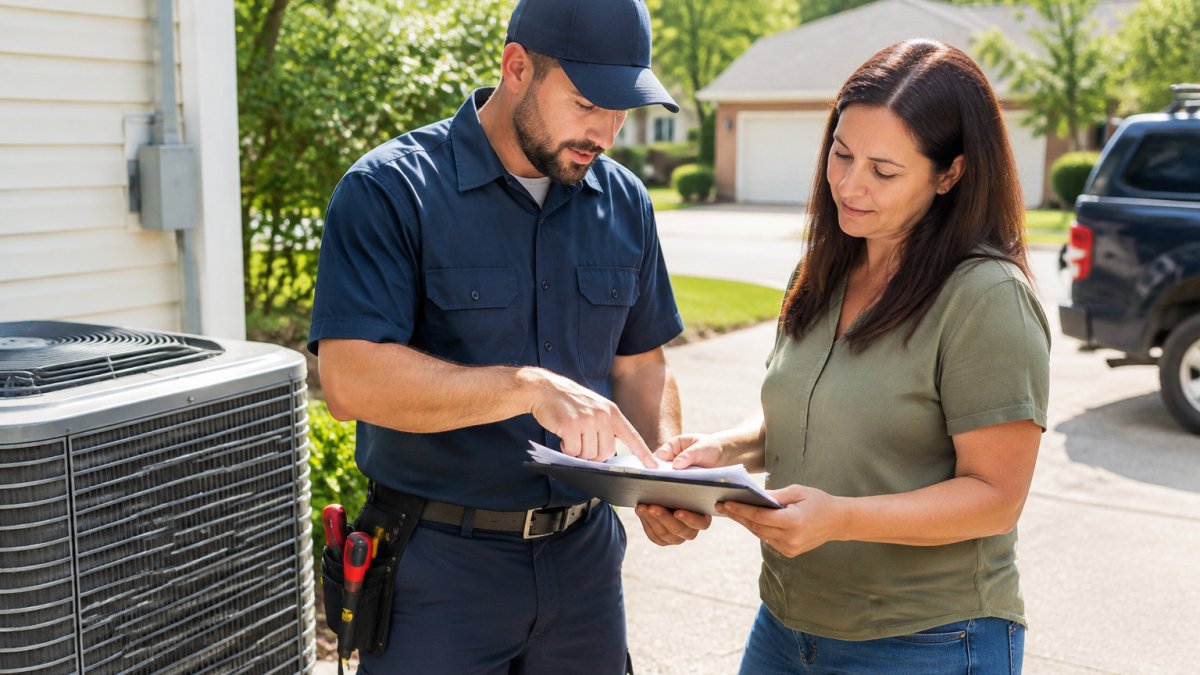
The line items every estimate should show
- The diagnosed problem in plain language, not a model number alone
- Each part to be replaced, with the part number and its price
- Labor hours and the hourly rate, or the flat-rate price for the specific repair
- Any trip, diagnostic, or after-hours fee, and whether it is credited toward the repair
- Sales tax, if applicable
- A warranty statement covering parts and labor separately, with durations
- The provider's license number and a contact for questions
Authorization: the step most homeowners skip
Approving an estimate is a decision, not a formality. Before you sign or reply "approved," confirm three things in writing: the total price, the scope of work, and the condition that no additional work will be performed without a revised written estimate you approve. A common pattern among careful providers is a signature line that separates "diagnosis authorized" from "repair authorized" so you are never agreeing to the second when you only meant the first.
Watch out: a verbal "we'll take care of it" is not authorization language. If the estimate does not state that price changes require your approval, ask the provider to add that sentence before you sign.
When the diagnosis changes mid-repair
Technicians sometimes find a second failure once the unit is open. The estimate should tell you what happens next: the technician stops, documents the new finding, and sends a revised written estimate for your approval before continuing. Ask the provider to confirm this process when you book. If the final bill includes work that was not on any estimate you approved, you have grounds to dispute the charge, and the written record is your evidence.
How to compare two quotes fairly
A lower total is not automatically the better quote. Compare estimates like for like using this checklist:
- Same diagnosis. Do both providers name the same failed component, or is one quoting a repair and the other a replacement?
- Same parts. Compare part numbers and whether the part is OEM or aftermarket.
- Same labor basis. One flat-rate quote and one hourly quote are not comparable until you convert them to a total.
- Same fee treatment. If one provider credits the diagnostic fee and the other does not, add the uncredited fee back into that provider's total.
- Same warranty. A longer labor warranty has real value; note it next to the price.
- Same scope. Confirm both quotes cover the same work, including any cleanup or permit.
Write the six items in a column for each provider and compare row by row. The provider with the clearer written scope is usually the safer choice even when the total is a few dollars higher, because the estimate is the document you will rely on if the bill changes.
A written estimate should show each of these line items before you approve any work.
| Line item | What to check | Why it matters |
|---|---|---|
| Diagnosed problem | Plain-language description | Not just a model number |
| Parts | Part number and price for each | Shows exactly what gets replaced |
| Labor | Hours and hourly rate, or flat rate | Shows how the labor is billed |
| Trip or diagnostic fee | Whether it is credited to the repair | Changes your total cost |
| Warranty | Parts and labor listed separately | Durations differ by coverage |
| License number | Provider's license on the estimate | Confirms the provider is licensed |
Questions to Ask a Technician Before Scheduling Repair Service
Most cost guides stop at a bulleted list of questions. The harder problem is knowing what a good answer sounds like and when an answer should stop you from booking. Use the questions below as a call script, and treat the response patterns as a filter rather than a formality.
The five questions that change your total cost
- "What is your diagnostic or trip fee, and is it credited toward the repair if I approve the work?" A clear answer names a dollar figure and states the credit policy in the same sentence. An evasive answer ("it depends on the job") usually means the fee is not credited.
- "Do you bill hourly, flat rate, or both, and what is the rate?" Flat-rate pricing quotes a fixed price per repair; hourly pricing quotes time and materials. Ask which one applies to your symptom so you can compare providers on the same basis.
- "What are your after-hours, weekend, and holiday rates, and when do they start?" Confirm the exact clock time the higher rate begins, not just that one exists.
- "Will you give me a written, itemized estimate before any work starts, and will you call me before the price changes?" The second half of that question matters as much as the first.
- "Do you warranty parts and labor separately, and for how long?" A one-year parts and 90-day labor warranty is a common pattern; ask for the specific terms in writing.
Two questions that filter out weak providers
- "Are you licensed and insured, and can you send the license number before the visit?" A provider who cannot produce a license number before booking is a booking risk, not just a pricing risk.
- "If the diagnosis changes mid-repair, will you stop and get my approval on a revised written estimate?" This is the single question that prevents the most common billing dispute.
How to run the call
Write the answers down as you hear them, including the name of the person you spoke with and the date. Ask the provider to email or text the fee schedule and warranty terms so you have them before the technician arrives. If two providers give you the same answers in writing, you can compare them on price alone. If one gives verbal answers and the other gives written ones, the written provider is the safer booking even at a slightly higher rate.
A simple pre-scheduling decision process
- Describe the symptom in one sentence (for example, "the outdoor unit hums but the fan does not spin").
- Ask for the diagnostic fee, the labor rate, and the after-hours rate in the same call.
- Ask whether the diagnostic fee is credited and get the answer in writing.
- Ask for the warranty terms on parts and labor.
- Compare at least two providers on those four numbers before you book.
Watch out: a provider who quotes a total repair price over the phone before seeing the system is guessing, and a provider who refuses to quote any fee at all is hiding the number that matters most. Either pattern should send you to the next call.
Repair Versus Replacement: When the Numbers Change
A repair is not always the cheaper choice. Our dedicated article on HVAC repair versus system replacement walks through that decision in detail. Some estimates cost so much that replacing the system makes more sense. Replacement costs depend on the system type and the home. When a repair approaches a large share of the replacement cost, especially on an old unit, ask the technician to explain the trade-off. A system that is 15 years old and needs a major compressor repair may warrant a replacement discussion.
Ask for your options in writing: the repair cost, the estimated remaining life of the unit, and the replacement price range. That gives you what you need to decide without pressure.
Red Flags and Protections to Know About Before You Approve Work
Watch for these warning signs during a booking or a service call:
- Refusal to give a price or a written estimate
- A large upfront deposit before any diagnosis
- Pressure to approve work the same day without time to think
- Unexplained add-on charges that were not on the estimate
- No license or insurance information
You have protections. Never approve work you do not understand. You can ask the technician to explain each line item and to show you the failed part. You can also get a second estimate for a major repair. Compare the diagnosis, the parts, and the labor, not just the total.
Booking Your Repair Visit With Clear Pricing in Hand
When you are ready to schedule, get the questions above answered first. If you are dealing with a broken system, go straight to our HVAC repair service page to book a visit, or use our furnace repair page if your heat has failed. Once the technician has given you a written estimate, you will know exactly what the repair involves and what it costs. Contact T. Gomes Heating & Cooling to schedule your visit today.
Frequently Asked Questions
Do HVAC companies charge a diagnostic fee?
Many HVAC companies charge a diagnostic fee to inspect the system and identify the problem. Service-call and after-hours fees vary by provider. Ask whether the diagnostic fee is listed separately, whether it is waived or credited if you approve the repair, and whether it applies to the total before you schedule. Get the answer in writing so the final invoice does not surprise you.
Is the diagnostic fee applied to the cost of the repair?
This varies by company, so you should ask directly before booking. Some providers credit the diagnostic or service-call fee toward the repair if you approve the work they recommend, while others charge it separately. Confirm the policy on the phone and note it on your appointment confirmation. A written estimate should show whether the diagnostic fee is included in the repair total or added on top.
Can an HVAC technician give a repair estimate over the phone?
A technician can often give a rough range over the phone based on your symptoms, system type, and age, but an accurate estimate usually requires an on-site inspection. Phone ranges are useful for budgeting, yet a firm price generally depends on confirming the failed part. Ask for the labor rate, parts basis, and any after-hours or emergency charges so you can compare the estimate with what you actually find on site.
How can I compare HVAC repair quotes fairly?
Compare quotes that cover the same scope: the same diagnosis, the same parts, and the same warranty terms. Check whether each company includes the service-call fee, labor, parts, and any after-hours charges. Published U.S. guides report typical HVAC labor at $75 to $150 per hour and emergency labor at $140 to $250 per hour, so large gaps may signal a different scope. Ask each provider to put the total in writing before you authorize work.