 comparison
HVAC Repair vs System Replacement: Which to Choose
Last Updated: October 26, 2026
Quick Summary
HVAC repair vs system replacement comes down to age, repair history, efficiency, and cost: hvac repair averages $415 to $1,200, so repair usually wins when the system is under 10 years old and the fix costs well below 50% of a new system. Lean toward replacement at 15+ years, a third repair in two years, or a repair above 50% of new system cost.
- Project repairs, operating costs, and eventual replacement over the system's remaining life instead of comparing one repair quote to one replacement price.
- The 50% rule says replacement makes more sense when a repair costs more than half of a new system, but treat it as a starting point.
- HVAC system lifespan typically runs 15 to 20 years for a furnace or air conditioner, while heat pumps often land closer to 12-15.
- Replace the whole system when the furnace and air conditioner are the same age and share components like a matched coil or blower.
- Ask for a room-by-room load calculation and itemized bids that separate equipment, labor, ductwork, permits, and disposal.
Table of Contents
- HVAC Repair vs System Replacement: The Core Decision
- HVAC Repair vs Replacement Cost: What the Numbers Show
- When to Replace an HVAC System
- HVAC System Lifespan and the Age Factor
- Repair History, Breakdown Frequency, and Reliability
- Should You Replace the AC or the Whole HVAC System?
- Book a Repair or Replacement Assessment
- Frequently Asked Questions
HVAC Repair vs System Replacement: The Core Decision
The average HVAC repair runs $415 to $1,200, according to BDR's 2026 HVAC industry trends report, while a full system replacement costs far more. If you decide to repair, you can review the HVAC repair service we offer.
HVAC repair vs system replacement is the choice between fixing a specific failed component and installing a new system when the repair no longer makes financial sense. Below, we break down the cost math, the lifespan benchmarks, and the warning signs that tip the decision one way or the other.
Repair vs Replace at a Glance
| Factor | Lean Toward Repair | Lean Toward Replacement |
|---|---|---|
| System age | Under 10 years | 15+ years |
| Repair cost | Well below 50% of new system cost | Above 50% of new system cost |
| Breakdown history | First or second failure | Third repair in two years |
| Efficiency | Still meets your comfort needs | Rising bills, uneven rooms |
| Warranty | Parts still covered | Coverage expired |
HVAC Repair vs Replacement Cost: What the Numbers Show
Cost is where most homeowners start, and for good reason. BDR puts average repairs at $415-$1,200 in 2026, a range that covers everything from a failed capacitor to a blower motor.
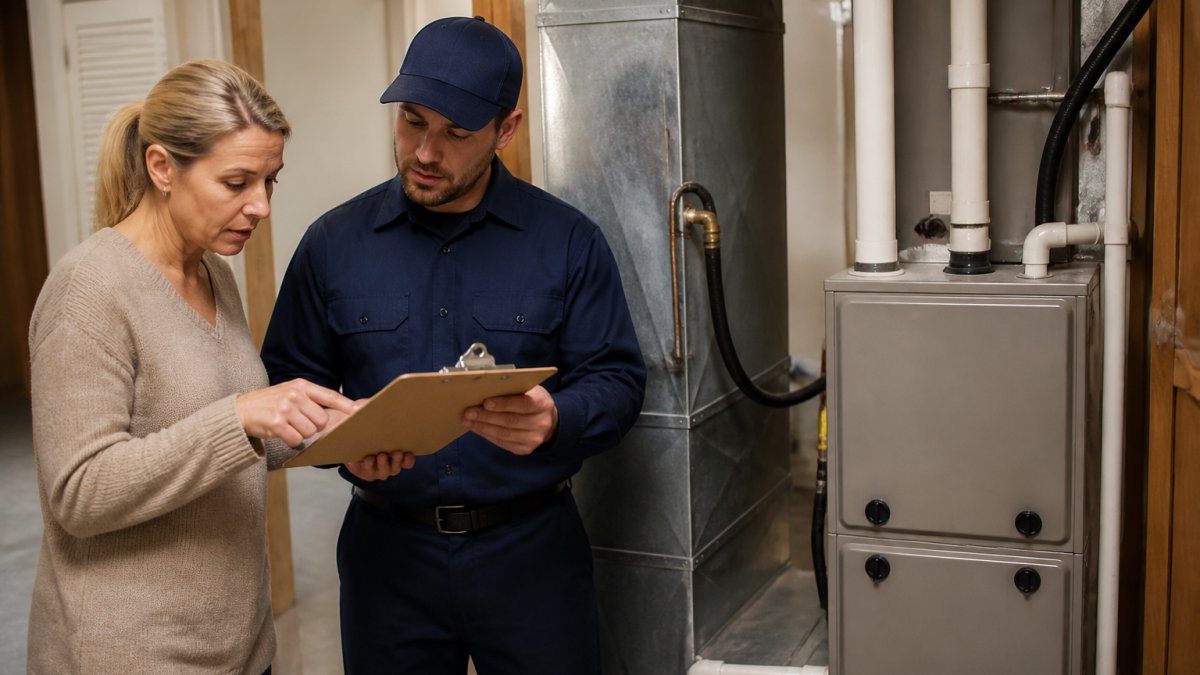
Build a Multi-Year Cost Comparison, Not a One-Visit Comparison
Most guides stop at the sticker price of one repair versus one replacement. That comparison is misleading because it ignores what you will spend over the next several years.
Use this framework:
- Estimate remaining life. Subtract the system's age from its expected lifespan. A 10-year-old furnace with a 15-20 year lifespan has roughly 5-10 years left; an 18-year-old unit has 2-3 years at best.
- Add up likely repairs. Multiply your recent repair frequency by the remaining years. If you have averaged one $600 repair per year for the last three years, budget roughly $600 per year going forward, and expect the frequency to rise as the system ages.
- Add operating cost. Compare the current system's efficiency rating with a new system's. A furnace rated at 80% AFUE versus a 96% AFUE replacement can cut gas use meaningfully; an older 10 SEER air conditioner versus a 15 SEER2 unit can cut cooling electricity use by roughly a third. Your utility bills and a contractor's load calculation are the only reliable way to put dollars on that difference.
- Add replacement cost at the end of remaining life. If the current system has 5 years left, you will pay for a new system in year 5 either way, the question is whether you also pay for repairs in years 1-5.
A common pattern: a $900 repair on a 6-year-old system with 10+ years of remaining life usually wins on total cost. The same $900 repair on an 18-year-old system with 2-3 years left often loses once you add projected repairs and higher operating costs.
Why the Numbers Vary by Region and Home
National averages hide wide variation. Replacement costs are driven by system size (tonnage for cooling, BTU output for heating), efficiency tier, ductwork condition, and local labor rates. A straightforward swap in a mild climate with existing matched ductwork sits at the low end; a project that requires duct sealing, a new line set, electrical upgrades, or a transition from one fuel type to another sits at the high end.
Financing Changes the Math, But Not the Logic
Financing changes the equation. According to ServiceTitan's 2026 HVAC statistics, 62% of homeowners were more likely to move forward when payment options were available. A repair you can afford today may cost less over time than a replacement you finance, but only if the system has useful life left. Run the multi-year comparison first, then decide how to pay for it.
The 50% Rule and Its Limits
The 50% rule says replacement makes more sense when a repair costs more than half of a new system. Coleman-Mitchell's 2026 repair vs replace guide describes it as a general decision rule, not an official standard.
Here's the catch most guides skip: the thresholds don't agree. Aero Energy's guidance uses a 30% mark for considering repair, while Coleman-Mitchell uses 50% for considering replacement.
When to Replace an HVAC System
Replace when the system is old, failing repeatedly, and burning money on utilities. If you are leaning toward replacement, you can see details on our HVAC installation service.
Lennox offers a different rule of thumb: multiply the unit's age by the repair cost, and consider replacement when that total tops $5,000.
Watch out: replacing a single component on an aging system can leave you with a mismatched setup that never performs as designed.
HVAC System Lifespan and the Age Factor
HVAC system lifespan typically runs 15 to 20 years for a well-maintained furnace or air conditioner, though heat pumps often land closer to 12-15. Those are general industry figures, not a guarantee for your unit.
The age factor matters because it sets your remaining useful life. A $900 repair on a 6-year-old system buys you a decade of service. The same repair on an 18-year-old unit buys you a few years at best, and the next failure is already on the calendar.
Repair History, Breakdown Frequency, and Reliability
Frequent breakdowns are the clearest replacement signal, more reliable than age or a single repair quote. One failed capacitor is bad luck. Three repairs in two winters is a pattern, and patterns predict the next emergency.
ServiceTitan reports that 79% of people surveyed were planning a repair or replacement in 2026, which tells you how common this crossroads is. If your system keeps landing you in that 79%, preventive maintenance is the cheaper path forward.
Should You Replace the AC or the Whole HVAC System?
Replace the whole system when the furnace and air conditioner are the same age and share components, like a matched evaporator coil or blower. Replacing only the AC on a 20-year-old furnace often means paying twice within a few years.
Replace just the AC when the furnace is newer, in good condition, and compatible with the new condenser. You can review our residential HVAC service overview to see the full scope of what we handle.
Why Refrigerant Rules and Efficiency Standards Drive the Scope
Air conditioners and heat pumps are built around a specific refrigerant. Older equipment commonly used R-22, which has been phased out under federal rules; current equipment uses R-410A or newer refrigerants with lower global-warming potential.
Efficiency standards add a second constraint. Current SEER2 standards apply to new equipment, and a new high-efficiency outdoor unit may require a matched indoor coil and, in some cases, a new line set or blower to deliver its rated performance.
How to Evaluate the Quotes and the Diagnosis
Whether you are replacing one component or the whole system, the quality of the diagnosis and the quote matters as much as the price. Use this checklist:
- Ask for a load calculation. A contractor sizing a new system should perform a room-by-room load calculation (often called a Manual J) rather than matching the old unit's tonnage. Replacing like-for-like can perpetuate an oversized or undersized system.
- Get itemized bids. Separate equipment, labor, ductwork, line set, electrical, permits, and disposal. Bids that lump everything into one number are hard to compare and easy to inflate.
- Confirm the matched system. For a split system, ask for the model numbers of the outdoor unit, indoor coil, and furnace or air handler, and confirm they are an AHRI-matched combination.
- Check the warranty terms. Manufacturer warranties on parts and the contractor's labor warranty are separate. Ask how long each lasts and what voids them, improper installation and mismatched components are common exclusions.
- Get a second opinion on major repairs. A compressor or blower motor diagnosis is worth a second look, especially if the first quote is close to the 50% threshold. A second technician may confirm the diagnosis, offer a different repair path, or reveal that the first quote was padded.
Book a Repair or Replacement Assessment
The right call comes down to a real diagnosis, not a phone estimate.
At T. Gomes Heating & Cooling, we've served homeowners and small commercial properties since 2013 as a licensed and insured team. Customers like Sara S. have called our service "quick and well priced," and that's the standard we hold.
Ready to settle the repair vs replace question for your home? Contact our team to schedule an assessment.
Frequently Asked Questions
What is the $5,000 rule for AC units?
The $5,000 rule is a rule of thumb popularized by Lennox: multiply the unit's age by the repair cost, and if the total exceeds $5,000, replacement may be worth considering. For example, a 12-year-old system with a $450 repair gives $5,400. It is a starting point for a conversation with a technician, not a verdict, because it ignores efficiency losses, refrigerant type, and how often the system has already broken down.
How do I know whether to repair or replace my HVAC system?
Weigh four things: system age against expected lifespan, the repair cost relative to a new system, how many repairs you have paid for in recent years, and whether efficiency or comfort has slipped. A single affordable fix on a system under 10 years old usually favors repair. A costly repair on an aging unit with a history of breakdowns usually favors replacement. Get a written diagnosis and quote before deciding.
Is it better to replace the AC unit or the whole HVAC system?
It depends on the age and condition of the other components. If the furnace or air handler is near the end of its service life, replacing only the AC can leave you with a mismatched system, and the old blower may not deliver the efficiency the new condenser is rated for. If the rest of the equipment is recent and in good shape, a matched replacement of just the failing component can make sense. Ask the technician to assess both.
How much does HVAC repair cost compared with replacement?
BDR reports average HVAC repair costs of $415 to $1,200 in 2026. Replacement is a significantly larger investment, so the comparison matters: a repair that costs a small fraction of a new system and restores reliable operation is usually the better short-term move. When a repair quote approaches half the cost of replacement, the math starts to favor a new system. Request an itemized quote for either path.
The repair-or-replace decision gets a lot easier when someone qualified puts the numbers in front of you. T. Gomes Heating & Cooling brings licensed and insured technicians, full-spectrum repair and installation capability, and a customer-centered approach that puts your interests first. Get started with T. Gomes Heating & Cooling and book an assessment that tells you exactly where your system stands.