 how-to
Why Is My AC Freezing? Causes and Fixes
Table of Contents
- Why Is My AC Freezing? The Short Answer
- 1. Dirty or Clogged Air Filters
- 2. Restricted Airflow From Blocked Supply Vents and Ducts
- 3. Low Refrigerant and Refrigerant Leaks
- 4. Dirty Evaporator Coils and Blower Fan Problems
- 5. Clogged Condensate Drain Lines
- How to Thaw a Frozen Air Conditioner Safely
- AC Evaporator Coil Frozen? What Homeowners Can Check
- Frequently Asked Questions
Last Updated: October 19, 2026
Why Is My AC Freezing? The Short Answer
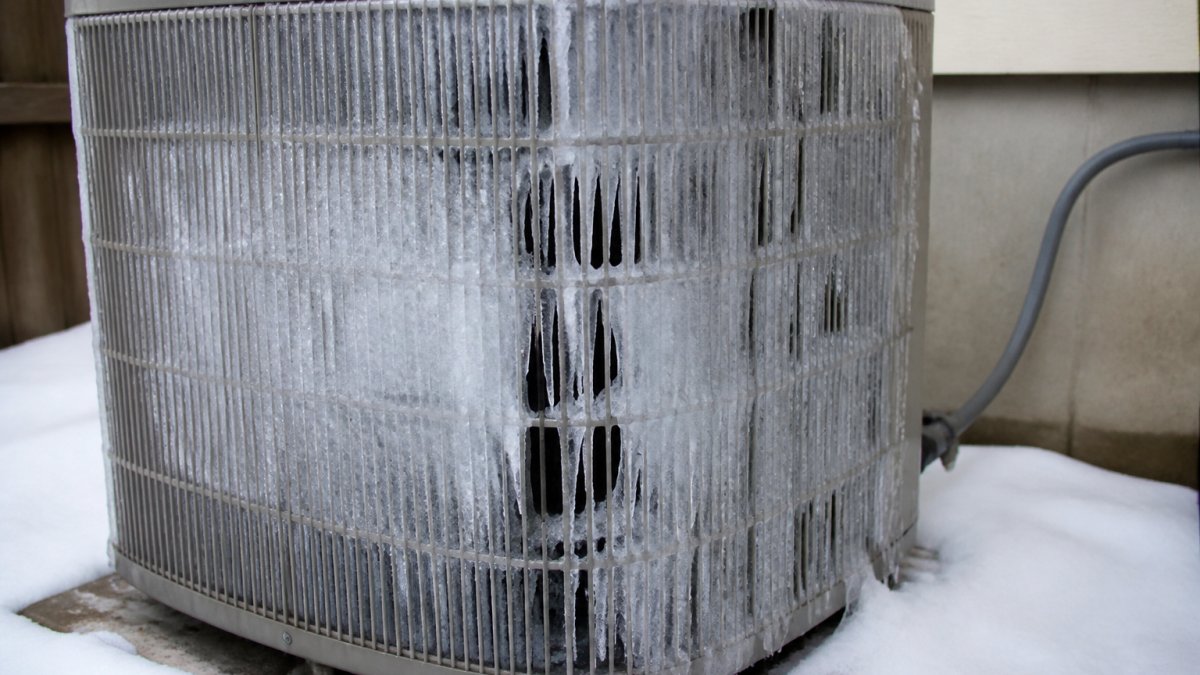
If you're wondering why is my AC freezing, the answer usually comes down to one thing: the cold coil inside your air handler is running below the freezing point of water, and something is stopping enough warm air from reaching it. That thin layer of condensation turns to ice, and the ice keeps growing. At T.
The short version: AC freezing is the buildup of ice on the evaporator coil when the coil gets too cold and airflow is too low. Five things cause almost every case:
- A dirty or clogged air filter
- Blocked supply vents or crushed ducts
- Low refrigerant from a leak
- Dirty evaporator coils or a failing blower fan
- A clogged condensate drain line
Below, we walk through each cause, how to tell them apart, and what you can safely fix yourself. We'll also show you exactly how to thaw a frozen air conditioner without damaging it.
1. Dirty or Clogged Air Filters
A dirty filter is the most common reason an AC freezes, and it's the easiest to fix. When the filter loads up with dust, less air moves across the evaporator coil.
What to do: Pull the filter and hold it up to a light. If you can't see through it, replace it. Most homes need a new filter every 1 to 3 months, and monthly during heavy summer use.
A common mistake is buying a "high-efficiency" filter with a very high MERV rating for a system that wasn't designed for it. Those filters catch more dust but also block more air.
2. Restricted Airflow From Blocked Supply Vents and Ducts
Restricted airflow doesn't only come from the filter. Closed or blocked supply vents, furniture pushed over returns, and crushed or disconnected ducts all starve the coil of warm air.
Walk through your home and check:
- Every supply vent is open and unobstructed
- Rugs, curtains, and furniture aren't covering returns
- No ducts are crushed in the attic, basement, or crawlspace
- No flex duct has come loose at a boot or plenum
A collapsed duct in a hot attic is a classic hidden cause. The system looks fine at the thermostat, but the coil is starving for air. If one room never cools well and the coil keeps freezing, suspect the duct run feeding that room.
3. Low Refrigerant and Refrigerant Leaks
Low refrigerant is the cause homeowners can't fix, and it's the one that does the most damage if ignored. Refrigerant doesn't get "used up." If the level is low, there is a leak.
Here's the mechanism in plain terms: less refrigerant means lower pressure and a colder coil. That drop in coil temperature pushes it below freezing, and ice forms. A technician confirms this with pressure and superheat readings, then finds the leak.
Signs that point to low refrigerant:
- Ice on the indoor coil and the outdoor unit's copper lines
- Weak airflow with air that feels cool but not cold
- Hissing or bubbling at the line set
- The system runs nonstop and never satisfies the thermostat
Never add refrigerant without finding and repairing the leak. Topping off a leaking system just postpones the same failure.
4. Dirty Evaporator Coils and Blower Fan Problems
A dirty evaporator coil acts like a dirty filter. Dust and grime insulate the coil, so heat transfer drops and the coil ices over. The blower fan matters just as much. A weak fan motor, a failing capacitor, or a slipping belt means less air moves across the coil.
What most guides miss is that these two problems often travel together. A dirty coil strains the blower, and a weak blower lets the coil get dirty faster. If your system freezes every season despite clean filters, ask a technician to check blower amp draw and coil condition, not just refrigerant.
5. Clogged Condensate Drain Lines
A clogged condensate drain line causes water damage and shutdowns, and it can contribute to freezing when the drain pan backs up and moisture sits against the coil. Algae, dust, and sludge build up in the line over time.
Check the drain line at the indoor unit:
- Look for standing water in the drain pan
- Check the outdoor drain termination for flow
- Look for a float switch that has tripped the system off
Many systems have a safety float switch that shuts the unit down when the pan fills. If your AC quit and the pan is full, the drain is likely clogged. Clearing it is often a simple flush, but a technician can confirm the line is clear and the switch is working.
How to Thaw a Frozen Air Conditioner Safely
Thawing a frozen AC is simple, but the order matters, and so do the safety boundaries.
- Turn the system off at the thermostat. Switch it to OFF, not just a higher temperature. Setting it to a warmer set point can still let the compressor cycle on.
- Turn off the cooling at the breaker or disconnect. This stops the outdoor unit from restarting while ice is still present. If you have a dedicated AC breaker in the panel, flip it. If you have an outdoor disconnect box, pull the handle.
- Decide on the fan. Running the indoor blower on FAN ONLY (not COOL) can speed thawing by moving room-temperature air across the coil. Do not run the fan if the blower is making grinding or humming noises, or if the belt is slipping, you can damage the motor. If the fan runs quietly, FAN ONLY for an hour or two is a reasonable assist.
- Replace the air filter. A clean filter gives the coil the airflow it needs to stay above freezing after restart.
- Open all supply vents and clear returns. Remove anything blocking airflow, including rugs, furniture, and closed registers.
- Let the ice melt. This usually takes a few hours. A light frost may clear in an hour or two; a solid block of ice can take most of a day. Never chip at the ice, pour hot water on the coil, or use a heat gun. The coil fins are thin and easy to bend, and water near electrical components is a shock risk.
- Check the drain pan and line. Clear any standing water before restarting. If the pan is full and the float switch has tripped, the system will not restart until the switch resets or the line is cleared.
- Confirm the ice is fully gone. Look at the indoor coil and the outdoor unit's copper lines. Any remaining frost means wait longer. Restarting with ice still on the coil is how compressors get damaged.
- Restart and watch. Turn the breaker back on, set the thermostat to COOL, and check the coil after 30 to 60 minutes. A properly running system should show condensation, not frost.
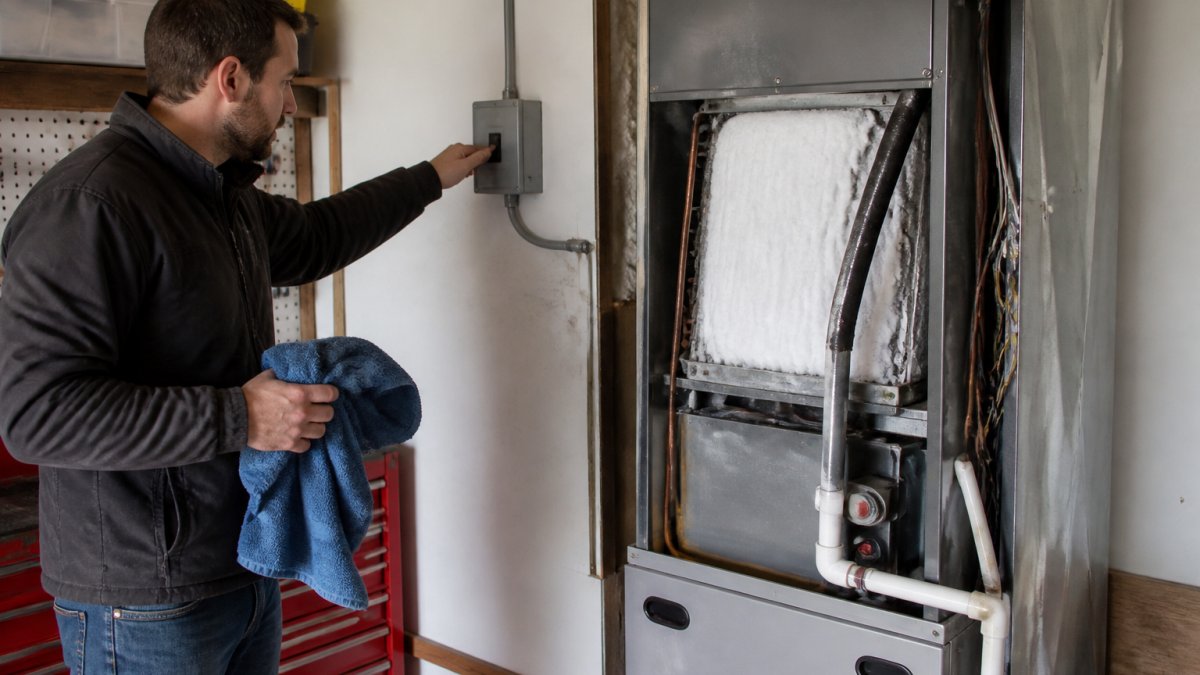
If the coil is still icing after a clean filter and open vents, stop and call a technician. That pattern points to refrigerant or a mechanical issue, and repeated thaw-and-restart cycles will not fix it.
AC Evaporator Coil Frozen? What Homeowners Can Check
An AC evaporator coil frozen solid is a symptom, not the problem itself. The useful question is not just "what causes it" but "which cause does my situation point to." You can safely check a few things. You should leave the rest to a licensed technician. The table below maps common symptoms to likely causes so you can narrow it down before you call anyone.
| Symptom | Likely Cause | Who Should Fix It |
|---|---|---|
| Ice on coil, weak airflow, dirty filter | Clogged filter | Homeowner |
| Ice returns after filter change | Low refrigerant or blower issue | Technician |
| One room never cools, coil freezes | Restricted or collapsed duct | Technician |
| Water in pan, system shut off | Clogged condensate line | Homeowner or technician |
| Blower hums but won't start | Bad capacitor or motor | Technician |
| Ice on outdoor copper lines only | Low refrigerant or metering device issue | Technician |
| Warm air from vents, system runs nonstop | Low refrigerant or compressor issue | Technician |
| Clicking or buzzing at outdoor unit | Electrical or contactor problem | Technician |
Safe for homeowners:
- Replace the air filter
- Open vents and clear furniture from returns
- Turn the system off and let ice melt
- Clear visible water from the drain pan
- Inspect accessible ducts for crushing or disconnects
Leave to a technician:
- Checking refrigerant pressure or adding refrigerant
- Cleaning the evaporator coil
- Testing the blower motor and capacitor
- Repairing refrigerant leaks
- Repairing or replacing ducts
- Any work on the sealed refrigerant system or electrical components
What to do if the AC freezes again after thawing
If the AC freezes again after thawing, the cause wasn't airflow. That is your signal to book a diagnostic visit rather than thaw and restart a second time. Repeated freezing points to an unresolved refrigerant, blower, or duct problem, and each freeze cycle puts stress on the compressor. A technician should check refrigerant pressure and superheat, blower amp draw, and coil condition, not just the filter.
When service is urgent
Treat a frozen AC as urgent if you see water leaking near the air handler, hear unusual noises from the outdoor unit, or the system will not restart after a full thaw. Water near electrical components and a compressor that keeps tripping are the two situations where waiting can turn a repair into a replacement. Our licensed and insured team has served homeowners and businesses since 2013, and we'll tell you honestly whether you need a repair or a replacement.
Frequently Asked Questions
Can a dirty air filter cause an AC to freeze?
Yes. A clogged filter chokes airflow across the evaporator coil, so the coil drops below freezing and frost builds up. Check the filter monthly during cooling season and replace it every 30 to 90 days, sooner in dusty homes or with pets. If the AC freezing started right after you skipped a filter change, swap it out, thaw the coil, then restart and watch for ice returning.
How long does it take for a frozen AC coil to thaw?
Most AC frozen coil thaw time runs about 1 to 3 hours once the system is off and the fan is set to run. Thicker ice on a badly frozen coil can take longer. Speed it up by turning off cooling, setting the thermostat fan to ON so room air moves across the coil, and leaving the filter in place but clean. Never chip ice off with a tool; you can puncture the coil.
Should I turn off my AC if it is freezing up?
Turn the cooling mode off as soon as you see ice. Running a frozen AC risks liquid refrigerant reaching the compressor, which is one of the most expensive parts to replace. Switch the thermostat to fan-only or off, let the ice melt, and inspect the filter and vents. If ice returns after a restart, stop cycling the system and call a licensed HVAC technician.
When should I call an HVAC technician for a frozen AC?
Call a technician if ice comes back after one thaw, if you see refrigerant oil or frost at the coil connections, if the blower fan does not spin, or if the system blows warm air after thawing. Those point to a refrigerant leak, a failing fan motor, or a mechanical issue that homeowners cannot fix safely. A licensed tech can test pressures and confirm the cause.
A frozen AC is usually a small problem with a clear fix, but ignoring it can turn a filter change into a compressor replacement. If your system keeps freezing, or you'd rather not troubleshoot refrigerant and blower issues yourself, T. Gomes Heating & Cooling can help. We offer full-spectrum HVAC repairs and maintenance, competitive pricing, and a customer-centered approach that puts your interests first. Book now and get your system cooling reliably again.